Chapter 01Records · Practical note
Who has a key to your house? Tracking sitters, neighbors and contractors
Keep one list with a line for every key that leaves the house: which lock it opens, who has it, the date it went out and the date it came back. Give spares to a person, not a hiding spot. Tag keys with a color or a phone number, never your name or address. Read the list once a year and ask for anything still out.
Source: King County Sheriff, Be a good neighbor, checked October 11, 2026; Sunriver Service District, Lost and Found Property, checked October 11, 2026.
- King County sheriff: spares go to a trusted neighbor, not under the matA person King County Sheriff, Be a good neighbor, October 11, 2026
- Sunriver police: no name or street address on a key ringNo address Sunriver Service District, Lost and Found Property, October 11, 2026
- Which lock, who, date out, date backFour columns Arithmetic from the figures on this page
Why spare keys get lost track of
Nobody gives out keys all at once. One goes to the neighbor the week you move in. Another goes to the dog sitter for a holiday trip. The painter gets one for the week of the job. A year later it's hard to say who still has one.
A short list fixes that. It takes a minute each time a key leaves, and it tells you which lock to think about if one never comes back.
The list: four columns
Which lock it opens
Front door, back door, garage side door, mailbox. If one key opens two doors, say so on the line.
Who has it
A first name and how you know them: neighbor, sitter, cleaner, contractor, family. Add a phone number if you might need to call for it.
Date out
The day you handed it over. For a job, add the job: painting the hall, the kitchen floor.
Date back
Fill it in when the key is back in your hand. A blank box is a key still out.
Codes go on the list too
If you give a garage keypad or door code instead of a key, add a line for it: who has it and when. Write where the code is kept, never the code. When the person no longer needs it, change the code and note the date.
Who usually has one
- A neighbor. King County's sheriff suggests a trusted neighbor or a nearby shopkeeper for the spare, not a doormat, a planter, a ledge or the mailbox.
- Family who live nearby, for emergencies and lockouts.
- Pet sitters and house sitters, often for a set trip. Write the dates of the trip on the line.
- Cleaners who come while you're out.
- Contractors for the length of a job: painters, flooring crews, anyone working while you're at work.
- The last owner or tenant, until the locks are changed. That one goes on the list as unknown.
Source: King County Sheriff, Be a good neighbor, checked October 11, 2026.
Let the tool do the arithmeticKeys, codes and remotes logThe key log counts how many sets you need, including the ones you lend out, and gives you a printable sheet with a column for who has each key.Example: 9 copies, 4 full sets (4 locks, 2 people, 1 remote to get)Open the toolTags that don't give you away
Sunriver's police in Oregon note that key rings are among the hardest lost items to return, and they say not to put your name or street address on keys or a key ring. Engrave or attach a phone number instead.
Source: Sunriver Service District, Lost and Found Property, checked October 11, 2026.
For keys you lend, colored caps work well. Write the color on the list: the blue key went to the neighbor, the green one to the sitter. If a key turns up in a drawer, the color tells you whose it was.
Getting keys back
Ask for the key on the last day of the job or the trip, while everyone remembers. Put it on the same text that settles the bill or says thanks. Then fill in the date back.
Once a year, read down the list. Any line without a date back is a key still out. Ask for it. If it's gone for good, the list tells you which lock it opens, so you can decide what to do about that lock.
Checklist to print
Set the list up once, then keep it going:
- Write every key you know is out
- Add the last owner or tenant as unknown
- Text each person to confirm they have it
- Note which lock each key opens
- Add codes given out: who has it, kept where
- Pick a color cap for each person you lend to
- Take in any key from a porch, planter or ledge
- Remove name and address tags from key rings
- Fill in date back when each key returns
- Read the list once a year and ask for keys still out
Tips and tricks
- Tip 01
Hand out copies, keep originals
Lend a copy and keep the keys the lock came with at home. Copies get cut from originals.
- Tip 02
One line per key, not per person
If the neighbor has the front and back door keys, that's two lines. Each one can come back on a different day.
- Tip 03
Check the hiding spots once
Walk the porch, the planters and the door ledges and take in any key you find. The King County sheriff lists all of these as places a spare shouldn't be.
Source: King County Sheriff, Be a good neighbor, checked October 11, 2026.
- Tip 04
Write it at the door
Write the line when you hand the key over. If it waits until later, it usually doesn't get written.
What we would do
Start the list tonight with what you remember
Write down every key you know is out, even without dates. Then text each person to check. From now on, add a line each time a key leaves, fill in the date back when it returns, and read the list once a year.
Questions
Where should I keep a spare house key?
King County's sheriff suggests a trusted neighbor or a nearby shopkeeper, not under a doormat or planter, on a ledge or in the mailbox.
Source: King County Sheriff, Be a good neighbor, checked October 11, 2026.
Should I put my address on my key ring?
No. Sunriver's police say not to put your name or street address on keys or a key ring, and to engrave or attach a phone number instead.
Source: Sunriver Service District, Lost and Found Property, checked October 11, 2026.
How do I keep track of who has a key to my house?
Keep one list with a line for each key that leaves: which lock, who has it, the date out and the date back. A blank date-back box is a key still out.
Should I give a contractor a key?
That's your call. If you do, put it on the list with the job and the date, and ask for it back on the last day of the job.
What if someone never gives a key back?
The list tells you which lock it opens and when it went out. Ask once more, then decide what to do about that lock. Note the date you decided.
Part of a system
This page is one part of a bigger job. The system page puts the parts in order.
The tool and more guides
 Chapter 01Keys, codes and remotes logCount the full sets of house keys you need, the copies to cut for each lock and the garage remotes to get, then print a log of who has what.Open the tool
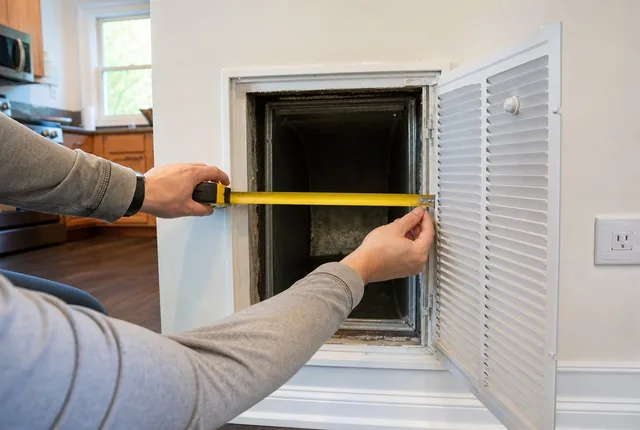 ProblemNo size printed on my air filter: how to find itThe print on the frame is gone or the slot is empty. Measure the opening, round to the nearest inch, and know when you need a custom size.Read the guide
 Practical noteWhat to change on move-in day: locks, garage opener and codesNew house, old keys. Here's the order to work in on move-in week: count what you got, change the locks, clear the garage opener, reset codes, then cut copies.Read the guide
- Chapter 01All records toolsPrintable home records with a calculator behind each one: appliance and warranty log, HVAC filter sizes and change dates.Open the chapter
Sources
- Be a good neighbor, King County Sheriff's Office (Washington). Checked October 11, 2026.
- Lost & Found Property, Sunriver Service District (Sunriver Police, Oregon). Checked October 11, 2026.
Every outside number on this page names its source and the date we checked it. See them all on the sources page. Spotted an error? Tell us.