Chapter 01Records · System
Move-in first month: a new home checklist, week by week
Split the first month into four short weeks. Week 1: put the papers you were handed in one folder, test each smoke alarm with its button, write down the air filter size, and ask where the shutoffs and the electrical panel are. Week 2: photograph every appliance label and fill in the appliance log. Week 3: do the home inventory one room a night and keep a copy outside the house. Week 4: set two monthly reminders (smoke alarm test, filter check) and file everything.
Source: NFPA, installing and maintaining smoke alarms, checked October 15, 2026; ENERGY STAR maintenance checklist, checked October 15, 2026; Oklahoma Insurance Department, Home Inventory Checklist, checked October 11, 2026.
- One short job list per week4 weeks Counted from this page
- Smoke alarm test with the button, from week 1Once a month NFPA, installing and maintaining smoke alarms, October 15, 2026
- Typical filter replacement, per makers (EPA)60 to 90 days EPA, Guide to Air Cleaners in the Home, October 9, 2026
Do it, skip it or get help
Do the checks and the lists yourself
Pressing a test button, reading a filter edge, photographing labels and writing a room list need a phone, a pencil and a step stool. Each week fits in two evenings.
Skip the rows that belong to someone else
Renting? The landlord usually owns the appliances and the heating. Keep the label photos and the alarm test, skip the warranty columns, and write down how to report a problem.
Get help for anything behind a panel or a valve
This system only records where things are. Opening the electrical panel, working a gas or water valve, or anything the home inspection flagged goes to the seller, the landlord or a licensed pro. Write down who you called and when.
The steps, in order
Week 1: one folder for the paper
Put everything you were handed at closing or at key pickup in one folder: manuals left in drawers, the inspection report, the lease, receipts. You sort it in week 4.
Have ready: One folder or box, and a pen to date the front
Week 1: test every smoke alarm
Press the test button on each alarm until it sounds, and write down the room. NFPA says to test smoke alarms at least once a month, so this is the first entry in a monthly habit. If one stays silent, note it and tell whoever owns the house.
Have ready: A step stool and the printed checklist
Source: NFPA, installing and maintaining smoke alarms, checked October 15, 2026.
Week 1: write down the filter size
Find the return grille, slide out the filter and copy the size from its cardboard edge. ENERGY STAR says to check the filter once a month. Nobody may know when it was last changed, so start your own date today.
Have ready: The filter size finder open on your phone, and a tape measure if the edge is blank
Source: ENERGY STAR maintenance checklist, checked October 15, 2026.
Week 1: ask where things are
Ask the sellers, the landlord or the inspector to show you the electrical panel, the main water shutoff and, if there is one, the gas meter. Write each location on the sheet. You only need to know where they are, so leave the handles alone.
Have ready: The inspection report, if you have one
Week 2: the label loop
Walk kitchen, laundry, then the utility room and garage. Open each appliance door, find the model and serial label, and take one photo per machine. The two guides below show where each label hides.
Have ready: A phone with flash, and a flashlight for the back of the fridge
Week 2: fill in the appliance log
At a table, turn the photos into rows in the appliance log: maker, model, serial, and the date if you know it. Look up each manual by model number on the maker's site. Leave warranty dates blank until you have a receipt.
Have ready: The label photos and the appliance log
Week 3: the home inventory, one room a night
Go room by room with the home inventory sheet: what it is, how many, what you paid, the serial number if it has one, and a photo. The Oklahoma Insurance Department suggests room by room as one way to organize it and says to keep the list somewhere safe outside the home.
Have ready: Your phone, and the boxes you have not unpacked yet
Source: Oklahoma Insurance Department, Home Inventory Checklist, checked October 11, 2026.
Week 4: set the monthly reminders
Put two repeating reminders on your calendar for the same day each month: test the smoke alarms, check the air filter. NFPA and ENERGY STAR both say monthly, so one date covers both.
Have ready: Your phone calendar
Source: NFPA, installing and maintaining smoke alarms, checked October 15, 2026; ENERGY STAR maintenance checklist, checked October 15, 2026.
Week 4: file it all
Sort the week 1 folder into the home records binder: the appliance log with its manuals and receipts, the filter page, the inventory, the locations sheet. List anything still missing on the last row of the checklist.
Have ready: The home records binder, or six folders on your phone
Print the working copy
One page, black and white, US Letter. Tick the boxes and write the dates in.
- All move-in paper in one folder
- Each smoke alarm tested, room written down
- Filter size copied, date started
- Electrical panel: location
- Main water shutoff: location
What goes wrong
The paper gets unpacked into five drawers
Manuals and receipts handed over on move-in day are easy to lose in the unpacking. One folder from day one keeps them together until you file them.
A silent smoke alarm goes unnoticed
An alarm can look fine and still not sound. Pressing the button is the only way to know, and the written room list tells you which one to report.
Nobody knows when the filter was changed
The last owner's schedule leaves with them. Writing a date in week 1 gives you a starting point; without one, the old filter stays in by default.
The inventory waits until something is gone
A list made after the fact relies on memory. Doing it room by room in week 3, while you are still unpacking, means most things pass through your hands anyway.
When the steps change
Renting an apartment
Skip the warranty columns and the outdoor rows. Keep the label photos (a repair request goes faster with a model number), the alarm test and the filter row if the filter is yours to change. Ask the landlord how to report problems and write it down.
Bought a house
Ask the sellers for manuals, receipts and service invoices before closing, and for the paint colors while you are at it. Whatever they leave goes straight into the week 1 folder.
Moved in with no paperwork at all
Week 2 does most of the work. The label photos give you model numbers, and the model numbers find the manuals online. The guide on new homes with no appliance paperwork walks through it.
Tips and tricks
- Tip 01
Do the alarm test on a weekend morning
The sound carries through the whole home. Warn the neighbors through a shared wall, and do it before anyone naps.
- Tip 02
Tape the filter size by the grille
A small label next to the return grille means the next filter run needs no binder.
- Tip 03
Photograph the label, then the whole machine
Two photos per appliance: the label, then the appliance in its spot. Later you can tell which fridge photo goes with which label.
- Tip 04
Inventory before the last boxes are flattened
Serial numbers on electronics are often printed on the box too. Copy them before the boxes go out.
- Tip 05
Use the same day every month
Pick a date you already notice, like the first of the month or rent day, for both reminders.
What we would do
Print the checklist and do week 1 this weekend
Week 1 is the short one: a folder, a button press per alarm, one filter size, and a few questions. After that each week takes a couple of evenings, and by the end of the month the binder holds the appliance log, the filter size, the inventory and the locations sheet.
The tools and guides in this system
 Chapter 01Home inventory sheetList what you own room by room, with what you paid, serial numbers and which items have a photo. See each room's total and print a one-page sheet.Open the tool
 Chapter 01Appliance and warranty logRecord each appliance's model number, serial number and purchase date, see which warranty ends next, and print a one-page log for the drawer.Open the tool
 Chapter 01HVAC filter size finder and replacement plannerTurn a nominal size like 16x25x1 into the filter's actual dimensions, or measure an old filter to find the size to buy, then plan the next change.Open the tool
 Practical noteNew home, no paperwork: build an appliance list in one afternoonMoved in and the manuals are gone? Walk the house in order, photograph every label, find each manual by model number and end with one printed list.Read the guide
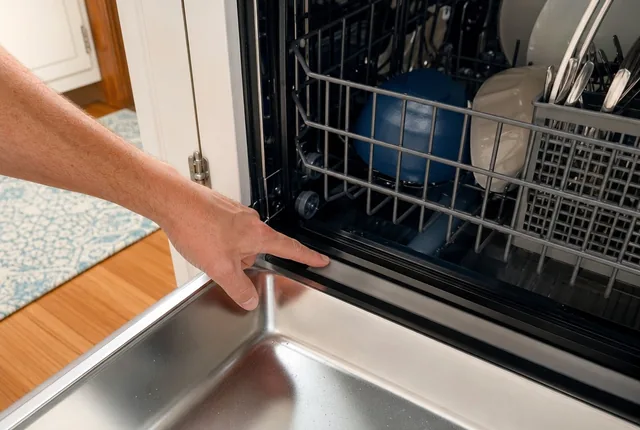 Know-howWhere to find the model and serial number on each applianceWhere the label usually sits on a fridge, dishwasher, range, microwave, washer and dryer, how to tell the two numbers apart, and how to copy them right.Read the guide
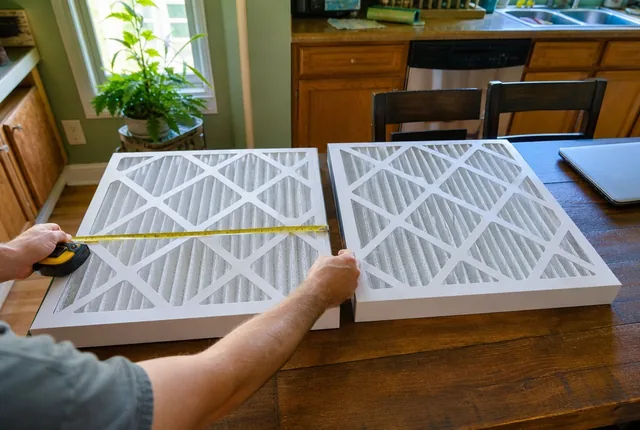 Know-howNominal vs actual HVAC filter sizes, explainedWhy a 16x25x1 filter measures about 15.5 x 24.5 x 0.75 inches, how to read the label, and how to size an old filter with no print on it.Read the guide
- Chapter 01All records toolsPrintable home records with a calculator behind each one: appliance and warranty log, HVAC filter sizes and change dates.Open the chapter
Questions
What should I do in the first week in a new home?
Four things: put all the paperwork you were handed in one folder, test every smoke alarm with its button and note the rooms, write down the air filter size, and find out where the electrical panel and the main water shutoff are.
Source: NFPA, installing and maintaining smoke alarms, checked October 15, 2026.
How often should I test smoke alarms and check the filter?
Both once a month. NFPA says to test smoke alarms at least once a month, and ENERGY STAR says to check the air filter monthly. EPA notes that makers typically recommend replacing a filter every 60 to 90 days.
Source: NFPA, installing and maintaining smoke alarms, checked October 15, 2026; ENERGY STAR maintenance checklist, checked October 15, 2026; EPA, Guide to Air Cleaners in the Home, checked October 9, 2026.
Where should I keep the home inventory?
Somewhere outside the home as well as inside it. The Oklahoma Insurance Department suggests a safe deposit box or another safe place away from the house.
Source: Oklahoma Insurance Department, Home Inventory Checklist, checked October 11, 2026.
I'm renting. Does any of this apply?
Most of it. Skip the warranty dates and anything outdoors, but keep the alarm test, the label photos and the inventory of your own things. Write down how your landlord wants problems reported.
Should I check the electrical panel or the water heater myself?
Only to know where they are. This checklist records locations and labels. Any work on a panel, valve or heater belongs to the landlord or a licensed pro.
The primary source
Home Inventory Checklist, Oklahoma Insurance Department. Checked October 11, 2026.
The steps on this page follow this source. Other figures cite their own source where they appear.
Other sources on this page
- Installing and maintaining smoke alarms, National Fire Protection Association (NFPA). Checked October 15, 2026.
- Heating and Cooling Maintenance Checklist, ENERGY STAR (U.S. EPA and DOE). Checked October 15, 2026.
- Guide to Air Cleaners in the Home, U.S. Environmental Protection Agency. Checked October 9, 2026.
See every source on the site on the sources page. Spotted an error? Tell us.