Chapter 01Records · System
Smoke and CO alarm record: every alarm, its dates and a monthly test
Give every smoke and CO alarm a number and write down where it is. Take each one down once and read the date it was made off the back; the smoke alarm is due 10 years after that date. Note whether it takes ordinary batteries or has a sealed 10-year battery. Then press each test button once a month, top floor down, and tick the box. NFPA asks for a monthly test and, for ordinary batteries, a new battery at least once a year.
Source: NFPA, installing and maintaining smoke alarms, checked October 15, 2026; NFPA, smoke alarms, checked October 8, 2026; USFA, Don't wait, check the date handout, checked October 12, 2026.
- Press the test button on every alarm (NFPA)Once a month NFPA, installing and maintaining smoke alarms, October 15, 2026
- From the date made to replacing a smoke alarm (NFPA, USFA)10 years NFPA, smoke alarms, October 8, 2026; USFA, Don't wait, check the date handout, October 12, 2026
- A new battery, if the alarm takes ordinary ones (NFPA)Once a year NFPA, installing and maintaining smoke alarms, October 15, 2026
Do it, skip it or get help
Keep the record yourself
Numbering the alarms, reading the dates, testing and changing ordinary batteries need a step stool and an hour the first time. After that the monthly test takes a few minutes.
Skip the rows your alarms don't need
Sealed 10-year alarms never get a new battery, so leave the battery rows blank for them. If the planner count already matches what is on your ceilings, skip the count and go straight to the dates.
Source: NFPA, installing and maintaining smoke alarms, checked October 15, 2026.
Get help with wires and with what your area requires
Taking down or swapping a hard-wired alarm is wiring work. Switch off and isolate the supply, check it is dead with a tester, follow local wiring rules, and use a licensed electrician where the law requires one. Your city or county fire or building department can tell you whether local rules ask for more alarms than NFPA's list.
The steps, in order
Number every alarm
Start on the top floor and work down. Give each smoke and CO alarm a number, write it on the base with a marker, and put the number, the room, the level and smoke, CO or both on the record.
Have ready: A marker, a step stool and the record sheet
Read the date on the back
USFA's steps: take the alarm down, look at the back for the date of manufacture, and put it back if it is less than 10 years old. Write the date made and the replace-by date (date made plus 10 years). No date at all counts as due.
Have ready: The step stool, and a phone to photograph each label
Source: USFA, Don't wait, check the date handout, checked October 12, 2026; NFPA, smoke alarms, checked October 8, 2026.
Check the count against NFPA's list
NFPA puts a smoke alarm in each bedroom, one outside each sleeping area and one on every level, and a CO alarm outside each sleeping area and on every level. A two-story house with four bedrooms and a basement comes to 7 smoke and 3 CO alarms. Write any gap on the list, bedrooms first.
Have ready: The smoke and CO alarm planner open
Source: NFPA, installing and maintaining smoke alarms, checked October 15, 2026; NFPA, carbon monoxide safety, checked October 15, 2026.
Note the battery type and the last change
An alarm with ordinary batteries gets a new battery at least once a year, and its back lists which batteries to use. A sealed 10-year alarm never gets a new battery: when it chirps for a low battery, the whole alarm is due. Write the type and the date of the last change.
Have ready: The battery list from the back of each alarm
Source: NFPA, installing and maintaining smoke alarms, checked October 15, 2026.
Pick a test day and test every month
NFPA says to test at least once a month with the test button. Pick one day, such as the first Saturday, warn the house, and press each button in number order. Test the CO alarms the same day, then tick each one off.
Have ready: Ten minutes and the monthly grid
Source: NFPA, installing and maintaining smoke alarms, checked October 15, 2026; NFPA, carbon monoxide safety, checked October 15, 2026.
Linked alarms: press one, listen for all
Interconnected alarms all sound when one sounds, USFA notes. When you test a linked alarm, listen for the others too, and note on the record any that stayed quiet.
Have ready: Someone upstairs, or the far end of the house, to listen
Source: USFA, Don't wait, check the date handout, checked October 12, 2026.
Once a year: batteries and the replace-by column
On one fixed day each year, put new batteries in the alarms that take ordinary ones, clean each alarm the way its maker says, and read down the replace-by column for anything due in the next twelve months.
Have ready: Batteries of the type on the back of each alarm
Source: NFPA, installing and maintaining smoke alarms, checked October 15, 2026.
When an alarm is replaced, start a new row
Give the new alarm the old number, then write its date made, its replace-by date and its battery type on a fresh row. Keep the old row as the history.
Have ready: The new alarm's box or the label on its back
Print the working copy
One page, black and white, US Letter. Tick the boxes and write the dates in.
- Every alarm numbered on its base
- Room, level, smoke, CO or both written down
- Date made read off the back of each
- Replace-by: date made plus 10 years
- CO alarm dates read from their own labels
What goes wrong
The alarms are older than anyone thought
The 10 years count from the day the alarm was made, not the day it went up. In a house you bought, the alarms on the ceiling can be close to that or past it. Reading every back once finds them.
Source: NFPA, smoke alarms, checked October 8, 2026.
A chirp at night and no idea which alarm
NFPA says a single chirp every 30 or 60 seconds means a low battery. With numbers on the bases and the battery type on the record, you know which alarms take ordinary batteries before you climb anything.
Source: NFPA, smoke alarms, checked October 8, 2026.
Still chirping after a new battery
That chirp means the alarm has reached the end of its life, NFPA says. Mark the row as due rather than buying a second battery.
Source: NFPA, smoke alarms, checked October 8, 2026.
Months go by without a test
Without a grid, a missed month leaves no trace. With a box per month, an empty one stands out the next time you open the binder.
A linked alarm that stays quiet
NFPA notes that linked alarms should come from the same maker, or they may not sound together. If one stays silent when another is pressed, write it down and check the maker's instructions.
Source: NFPA, installing and maintaining smoke alarms, checked October 15, 2026.
When the steps change
Sealed 10-year alarms
Drop the battery rows. The yearly check is the replace-by column only, and a low-battery chirp means that alarm is due.
Source: NFPA, installing and maintaining smoke alarms, checked October 15, 2026.
Apartment on one level
One level still gets an alarm in each bedroom and one outside each sleeping area. Bedrooms at both ends of the apartment count as two sleeping areas.
Source: NFPA, installing and maintaining smoke alarms, checked October 15, 2026.
Renting
Keep the same record as your own note of what is on the ceilings and the dates on each, and give a copy to whoever looks after the building.
Hard-wired alarms
The monthly test is the same button. Reading the date means taking the alarm down, which is wiring work, so mark the row "date unread" until an electrician can read it.
Tips and tricks
- Tip 01
Photograph each label
A photo of the back of each alarm, saved with its number, means you never take it down twice to check a date.
- Tip 02
Write the replace-by year on the base
Next to the number, write the year it is due. From the floor you can read both.
- Tip 03
Keep spare batteries with the record
A pack of the battery type listed on the back of your alarms, kept in the binder pocket, means a chirp at night can be fixed that night.
Source: NFPA, installing and maintaining smoke alarms, checked October 15, 2026.
- Tip 04
Test in number order
Number the alarms in the order you walk past them. The monthly test then follows the record line by line, so you don't miss one.
- Tip 05
Note the brand of linked alarms
Write the maker in the notes column. When one needs replacing, buy the same make; NFPA says mixed makes may not sound together.
Source: NFPA, installing and maintaining smoke alarms, checked October 15, 2026.
What we would do
Set it up on one Saturday morning
Number the alarms, read every back and note the batteries in one pass with the step stool. Anything past its replace-by date goes at the top of the list. Then do the first monthly test before you put the stool away, so the grid starts with a tick.
The tools and guides in this system
 Chapter 01Smoke and CO alarm plannerCount smoke and CO alarms level by level from NFPA's placement list, then get the replace-by date and the next battery change for your alarms.Open the tool
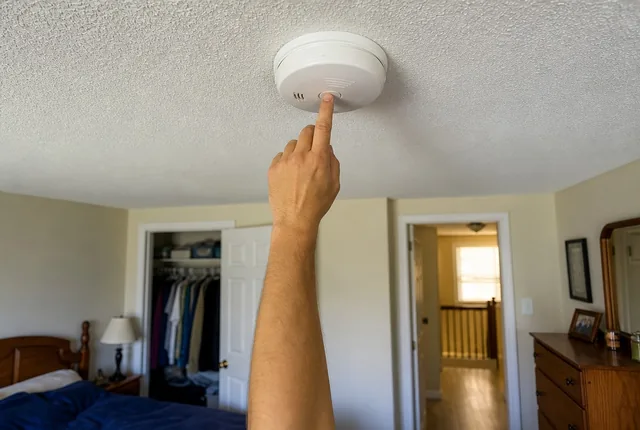 Practical noteHow to test smoke and CO alarms room by room, once a monthPress each test button on a fixed route, listen for the loud beep and write the date in the log. What a chirp means, plus the yearly battery job.Read the guide
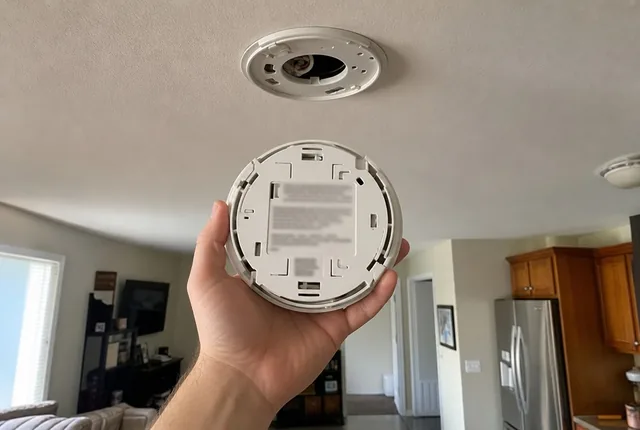 Know-howHow old is my smoke alarm? Reading the date on the backTake it down, find the date of manufacture on the back and add 10 years. What to do with no date, sealed batteries and CO alarms.Read the guide
- Chapter 01All records toolsPrintable home records with a calculator behind each one: appliance and warranty log, HVAC filter sizes and change dates.Open the chapter
Questions
How often should I test smoke and CO alarms?
At least once a month, with the test button. NFPA gives the monthly test for both smoke alarms and CO alarms, so test them on the same day.
Source: NFPA, installing and maintaining smoke alarms, checked October 15, 2026; NFPA, carbon monoxide safety, checked October 15, 2026.
How do I keep track of smoke alarm testing?
Number each alarm and keep one row per alarm on a sheet, with a box for each month. Tick the box when that alarm sounds, and write down any that stay quiet or chirp.
When do smoke alarms need to be replaced?
Ten years after the date of manufacture printed on the back, according to both NFPA and USFA. Write that replace-by date on the record the first time you read the label.
Source: NFPA, smoke alarms, checked October 8, 2026; USFA, Don't wait, check the date handout, checked October 12, 2026.
Do CO alarms last 10 years too?
Go by the CO alarm's own label. NFPA says to replace CO alarms according to the manufacturer's instructions, so read that label and write the date in the alarm's row.
Source: NFPA, carbon monoxide safety, checked October 15, 2026.
What should a smoke alarm record include?
The alarm number, where it is, smoke or CO or both, the date made, the replace-by date, the battery type and last change, whether it is linked, and a tick for each monthly test.
The primary source
Installing and maintaining smoke alarms, National Fire Protection Association (NFPA). Checked October 15, 2026.
The steps on this page follow this source. Other figures cite their own source where they appear.
Other sources on this page
- Smoke alarms, National Fire Protection Association (NFPA). Checked October 8, 2026.
- Don't Wait, Check the Date! Replace smoke alarms every 10 years, U.S. Fire Administration (FEMA). Checked October 12, 2026.
- Carbon monoxide safety, National Fire Protection Association (NFPA). Checked October 15, 2026.
See every source on the site on the sources page. Spotted an error? Tell us.