Chapter 01Records · Know-how
How old is my smoke alarm? Reading the date on the back
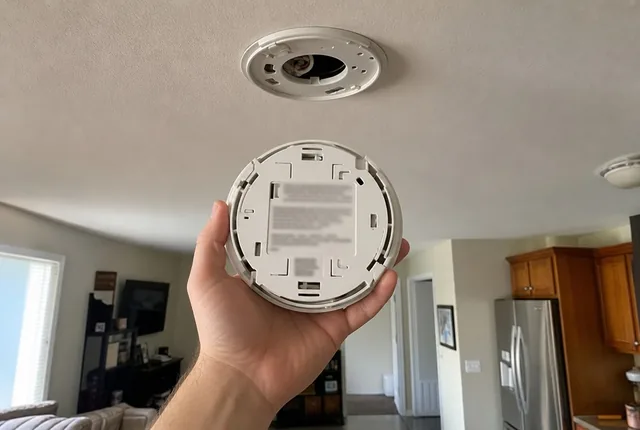
Take the alarm down and look at the back: the date of manufacture is printed there. Add 10 years and that's the replace-by date. It counts from the day the alarm was made, not the day it went up. USFA and NFPA both give the 10-year rule. If it's less than 10 years old, put it back and write the date in your log.
Source: USFA, Don't wait, check the date handout, checked October 12, 2026; NFPA, smoke alarms, checked October 8, 2026.
- From the date of manufacture to replace-by10 years USFA, Don't wait, check the date handout, October 12, 2026; NFPA, smoke alarms, October 8, 2026
- Where USFA says the date is printedOn the back USFA, Don't wait, check the date handout, October 12, 2026
- New battery, replaceable-battery alarms only1 a year NFPA, installing and maintaining smoke alarms, October 15, 2026
Hard-wired alarms: wiring safety first
If the alarm has wires behind it, taking it down or swapping it is wiring work. Switch off and isolate the supply, check it is dead with a tester, follow local wiring rules, and use a licensed electrician where the law requires one. If you'd rather not, mark it "date unread" in the log and have the date read when an electrician is next in the house.
Why the date matters
NFPA says every smoke alarm must be replaced 10 years after its manufacturing date, and USFA gives the same rule. It's easy to forget when the alarms went up, and the install date doesn't count anyway. The 10 years run from the date the alarm was made, which is printed on the back.
Source: NFPA, smoke alarms, checked October 8, 2026; USFA, smoke alarms, checked October 8, 2026.
Reading the date, step by step
Take the alarm down
Remove it from the ceiling or wall, as USFA's handout shows. Use a steady step stool, not a chair.
Find the date on the back
Look on the label for the date of manufacture. It may be a full date or a month and year.
Add 10 years
An alarm made in March 2017 is due in March 2027.
Write it down
Alarm number, place, date made and replace-by date go in the log. Next time you won't need the step stool.
Put it back and test it
If it's under 10 years old, put it back, then press the test button to check it still sounds.
Source: USFA, Don't wait, check the date handout, checked October 12, 2026; NFPA, smoke alarms, checked October 8, 2026.
Let the tool do the arithmeticSmoke and CO alarm plannerEnter the date made for each alarm. The planner adds 10 years, flags any alarm already due and sets the yearly battery date for the ones that need it.Example: 7 smoke, 3 CO alarms (3 levels, 4 bedrooms)Open the toolNo date, faded date, or a code
- No date at all: treat the alarm as due. The planner does the same.
- Faded or rubbed off: check the box, the receipt or your home records binder. If nothing turns up, treat it as due.
- A code instead of a date: the alarm's instructions or the maker's website explain how to read it.
- Just moved in: read every alarm in the first month. The move-in checklist has the step.
Battery type changes the routine, not the date
Alarms with a replaceable battery get a new battery at least once a year. Alarms with a sealed 10-year battery never get a new one: when they chirp for a low battery, NFPA says to replace the whole alarm. Either way, the replace-by date stays 10 years from the date made.
Source: NFPA, installing and maintaining smoke alarms, checked October 15, 2026; NFPA, smoke alarms, checked October 8, 2026.
CO alarms have their own date
The 10-year rule on this page is for smoke alarms. For carbon monoxide alarms, NFPA says to replace them according to the manufacturer's instructions, so read the replace-by date or the stated life on the CO alarm's own label and put that in the log. For a combination smoke and CO alarm, use whichever date comes first.
Source: NFPA, carbon monoxide safety, checked October 15, 2026; NFPA, smoke alarms, checked October 8, 2026.
Monthly testing is a separate job
Reading the date tells you when an alarm is due. The monthly button test tells you it still works today. The room-by-room test guide covers that one.
Checklist to print
Tick these off for each alarm:
- Alarm taken down from the ceiling or wall
- Date of manufacture found on the back
- Replace-by worked out: date made plus 10 years
- Alarm number, place and both dates in the log
- Alarm under 10 years old put back and tested
- Over 10 years or no date: marked for replacing
- Battery type noted: replaceable or sealed 10-year
- CO alarm replace-by date read from its own label
- Hard-wired alarms left to an electrician where required
Tips and tricks
- Tip 01
Read them all in one go
If the alarms went up together, they'll come due together, and you can plan one replacement day.
- Tip 02
Write the replace-by date where you'll see it
Use a marker on the side of the base or a strip of masking tape: "Replace by March 2027". NFPA says never to paint an alarm.
Source: NFPA, installing and maintaining smoke alarms, checked October 15, 2026.
- Tip 03
Photograph the label
A phone photo of each label goes in the home records binder, so the date survives when the label fades.
- Tip 04
New home? Read the alarms in week one
You can't know how old the previous owner's alarms are until you look.
- Tip 05
Plan the swap
If several alarms come due the same year, replace them together and start one fresh 10-year cycle.
Source: USFA, Don't wait, check the date handout, checked October 12, 2026.
What we would do
Read every date this month
Take each smoke alarm down, read the date of manufacture and enter the date made and the replace-by date in the planner. Replace anything over 10 years old or with no readable date. Leave hard-wired alarms to an electrician where the law requires one, and mark them "date unread" until then.
Source: USFA, Don't wait, check the date handout, checked October 12, 2026.
Questions
Where is the date on a smoke alarm?
On the back. Take the alarm down from the ceiling or wall and look for the date of manufacture on the label.
Source: USFA, Don't wait, check the date handout, checked October 12, 2026.
How long do smoke alarms last?
NFPA and USFA both say to replace every smoke alarm 10 years after the date it was made. The count starts at the date of manufacture, not the date you put it up.
Source: NFPA, smoke alarms, checked October 8, 2026; USFA, smoke alarms, checked October 8, 2026.
My smoke alarm has no date. What should I do?
Treat it as due for replacement. Without a date you can't tell how close it is to 10 years.
Source: USFA, Don't wait, check the date handout, checked October 12, 2026.
Do sealed 10-year battery alarms still need replacing?
Yes. NFPA says they're designed to work for up to 10 years, and if one chirps for a low battery you replace the whole alarm, since the battery can't be changed.
Source: NFPA, installing and maintaining smoke alarms, checked October 15, 2026.
Do carbon monoxide alarms expire too?
NFPA says to replace CO alarms according to the manufacturer's instructions, so check the CO alarm's own label for its replace-by date or stated life.
Source: NFPA, carbon monoxide safety, checked October 15, 2026.
Part of a system
This page is one part of a bigger job. The system page puts the parts in order.
 SystemSmoke and CO alarm record: dates, batteries and the monthly testNumber every smoke and CO alarm, read the date on the back, note the battery type, then test once a month and tick it off on one printable record.8 steps · 3 parts · 1 page to printOpen the system
 SystemSpring home checklist and leak-check recordThe spring list for a US home on one printable page: book the cooling check-up, date and test every alarm, check the filter, run the two-hour leak check.9 steps · 6 parts · 1 page to printOpen the system
The tool and more guides
 Chapter 01Smoke and CO alarm plannerCount smoke and CO alarms level by level from NFPA's placement list, then get the replace-by date and the next battery change for your alarms.Open the tool
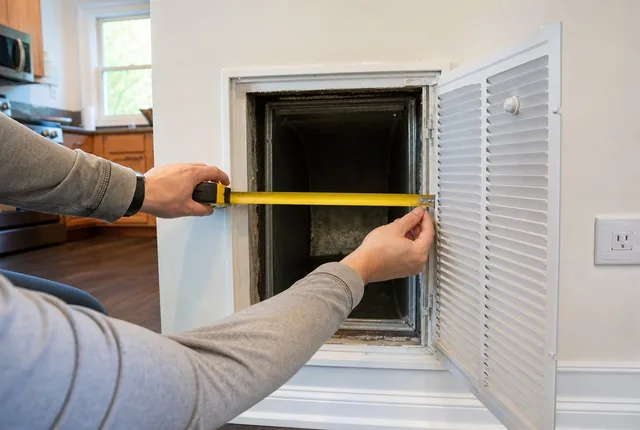 ProblemNo size printed on my air filter: how to find itThe print on the frame is gone or the slot is empty. Measure the opening, round to the nearest inch, and know when you need a custom size.Read the guide
 Practical noteWhat to change on move-in day: locks, garage opener and codesNew house, old keys. Here's the order to work in on move-in week: count what you got, change the locks, clear the garage opener, reset codes, then cut copies.Read the guide
- Chapter 01All records toolsPrintable home records with a calculator behind each one: appliance and warranty log, HVAC filter sizes and change dates.Open the chapter
Sources
- Don't Wait, Check the Date! Replace smoke alarms every 10 years, U.S. Fire Administration (FEMA). Checked October 12, 2026.
- Smoke alarms, National Fire Protection Association (NFPA). Checked October 8, 2026.
- Installing and maintaining smoke alarms, National Fire Protection Association (NFPA). Checked October 15, 2026.
- Smoke alarms, U.S. Fire Administration (FEMA). Checked October 8, 2026.
- Carbon monoxide safety, National Fire Protection Association (NFPA). Checked October 15, 2026.
Every outside number on this page names its source and the date we checked it. See them all on the sources page. Spotted an error? Tell us.