Chapter 02Paint · Tool and printable record
Paint coverage calculator
Gallons = paintable area × coats ÷ coverage per gallon. Paint makers publish one-coat figures in a band: Sherwin-Williams' calculator assumes 350 sq ft per gallon for walls, and Benjamin Moore lists 400 to 450 sq ft for Regal Select. A 12 x 14 ft bedroom with 8 ft walls, one door and two windows needs about 1.7 to 2.1 gallons for two coats.
Source: Sherwin-Williams paint calculator, checked October 10, 2026; Benjamin Moore Regal Select (matte) product page, checked October 5, 2026.
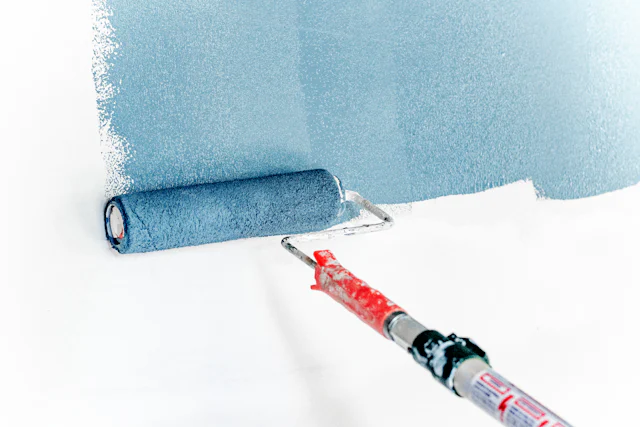
Paint coverage calculator
Paint needed 1.65 to 2.13 gallons (6.3 to 8.1 liters)
Buy2 gallons and 1 quart
- Wall area before openings
- 416 sq ft (38.6 m²)
- Doors and windows
- 44 sq ft (4.1 m²)
- Paintable wall area
- 372 sq ft (34.6 m²)
- Area × 2 coats
- 744 sq ft (69.1 m²)
How to use this, in plain words
Measure each wall along the floor with a tape measure, then measure from the floor to the ceiling. Rounding up to the next half foot is fine.
Count the doors and windows on those walls and measure one of each. Doors in the same house are often the same size, so one measurement may cover them all.
Find the coverage figure on the can label or the product page, in square feet per gallon, and type it into both coverage boxes. No can yet? Leave the band as it is.
Set the number of coats you plan to put on. The label often says how many it expects.
Read the buy line. It has already rounded up to the next quart.
Print the paint record and write the color code and batch number on it before the can gets messy.
Before you start
- Note 01
Measure walls, not the floor
A floor plan gives floor size. Paint goes on wall area, which grows with ceiling height, so a tall room needs more than its floor size suggests.
- Note 02
Get every can mixed at once
Ask for all the cans of one color to be mixed together, or pour them into one bucket at home, so the color matches from wall to wall.
- Note 03
Primer is a separate buy
If you prime, run the tool again with the primer's own coverage figure.
- Note 04
Trim and ceilings are separate too
They often take a different finish. Sherwin-Williams' calculator uses 400 sq ft per gallon for ceilings, trim and doors.
Source: Sherwin-Williams paint calculator, checked October 10, 2026.
How it works
- Wall area = room perimeter (2 × length + 2 × width) × wall height. For a single wall, use its width × height.
- Subtract each door and window: width × height × how many.
- Paint needed = paintable area × coats ÷ coverage per gallon, worked out at both ends of the band, 350 and 450 sq ft per gallon. Put your can's own figure in both boxes if the label gives one.
- What to buy: the higher figure rounded up to the next quart (a quarter gallon).
Source: Sherwin-Williams paint calculator, checked October 10, 2026; Benjamin Moore Regal Select (matte) product page, checked October 5, 2026.
Worked example
A 12 x 14 ft bedroom with 8 ft walls, one 3 ft x 6 ft 8 in door and two 3 x 4 ft windows, painted with two coats.
- Wall area: 2 × (14 + 12) × 8 = 416 sq ft.
- Openings: one door 3 ft × 6 ft 8 in (20 sq ft) and 2 windows at 3 × 4 ft (24 sq ft) = 44 sq ft.
- Paintable: 416 − 44 = 372 sq ft. Two coats: 744 sq ft.
- Gallons: 744 ÷ 450 = 1.65, and 744 ÷ 350 = 2.13. Buy 2 gallons and 1 quart.
If the answer surprises you
A store calculator said less
Some calculators use one coverage figure and one coat. This tool works at both ends of a band, 350 and 450 sq ft per gallon, and multiplies by your coats, so its top figure is higher on purpose.
Source: Sherwin-Williams paint calculator, checked October 10, 2026; Benjamin Moore Regal Select (matte) product page, checked October 5, 2026.
You ran out anyway
Sherwin-Williams says published coverage leaves out the texture of the wall and the paint left on rollers and brushes. Rough or porous walls and a big change of color use more.
Source: Sherwin-Williams painting FAQs, checked October 17, 2026.
Two gallons and a quart looks odd
The tool rounds the higher figure up to the next quarter gallon, not the next full gallon, so you are not left with a nearly full can. If your color only comes in gallons, round up to the gallon.
What to record
Touch-ups go wrong when nobody remembers which paint went on which wall. The printable paint record keeps one row per room or surface:
- Room and surface (walls, ceiling, trim)
- Brand, product line and finish
- Color name and code
- Base or batch number from the can label
- Gallons bought and gallons left over
- Date painted and number of coats
- Where the touch-up can is stored
Variants
Ceiling
Tick the ceiling box to add length × width. Sherwin-Williams' calculator assumes 400 sq ft per gallon for ceilings, inside the band this tool already uses.
Source: Sherwin-Williams paint calculator, checked October 10, 2026.
One accent wall
Switch to single-wall mode and enter that wall's width and height.
If you rent
Before you repaint, note the current color name and code on the record sheet. You will need it if the walls have to go back to the original color.
Numbers this tool uses
- Walls, one coat (Sherwin-Williams calculator)350 sq ft per gallon Sherwin-Williams paint calculator, October 10, 2026
- Ceilings, trim and doors, one coat (Sherwin-Williams calculator)400 sq ft per gallon Sherwin-Williams paint calculator, October 10, 2026
- Regal Select interior matte (Benjamin Moore)400 to 450 sq ft per gallon Benjamin Moore Regal Select (matte) product page, October 5, 2026
- Why real coverage runs lowerPublished figures leave out surface texture and paint left on tools Sherwin-Williams painting FAQs, October 17, 2026
Limitations
- Planning estimate; check the manufacturer's coverage figure on your can's label or data sheet, and measure your own doors and windows.
- Rough, textured, porous or bare surfaces and big color changes use more paint. Sherwin-Williams calls a 400 sq ft per gallon figure theoretical, because texture and the paint left on rollers and brushes are not part of it.
- Primer is a separate product with its own coverage figure. Run the tool again with the primer's label figure.
Tips and tricks
- Tip 01
Read coverage on the can you buy
Coverage varies by product line, even from one brand. Use the figure printed on the label or the maker's data sheet for that exact paint.
- Tip 02
Measure doors and windows once
Interior doors in one home are often the same size. Measure one, then count them.
- Tip 03
Keep the mixing label
The sticker on the lid holds the color formula. Photograph it, or write the code in your home records, so a touch-up can be matched years later.
- Tip 04
Rough walls take more
Textured plaster, new drywall and dark old colors soak up paint. Plan on the low end of the coverage band for those walls.
- Tip 05
Label leftovers by room
Write the room name and the date on the lid of each leftover can before it goes on the shelf.
What we would do
Buy for two coats and box the color
Run the calculator for two coats at the lower coverage figure, round up to whole gallons, and mix every can of one color together in a bucket before you start. A sealed can left over is easier to deal with than a second trip and a color that does not quite match.
Questions
How many square feet does a gallon of paint cover?
It depends on the product. Sherwin-Williams' calculator assumes 350 sq ft per gallon for walls and 400 for ceilings, and Benjamin Moore lists 400 to 450 for Regal Select. Those are one-coat figures on a smooth surface.
Source: Sherwin-Williams paint calculator, checked October 10, 2026; Benjamin Moore Regal Select (matte) product page, checked October 5, 2026.
How much paint for a 12 x 12 room?
With 8 ft walls, one 3 ft x 6 ft 8 in door and one 3 x 4 ft window, the walls come to 352 sq ft. Two coats at 350 to 450 sq ft per gallon is about 1.6 to 2.0 gallons, so buy 2 gallons and a quart.
Source: Sherwin-Williams paint calculator, checked October 10, 2026; Benjamin Moore Regal Select (matte) product page, checked October 5, 2026.
Do I subtract doors and windows?
Yes, for a closer figure. If you want a margin, leave small openings in; the tool already rounds up to the next quart.
Should I keep leftover paint?
A labeled leftover can makes touch-ups match. Note on the record sheet which room it belongs to and where it is stored.
Part of a system
This page is one part of a bigger job. The system page puts the parts in order.
 SystemHome records binder: your house manualSix tabs for the facts a house keeps asking for: appliances and warranties, filter sizes, paint colors, measurements, manuals and service visits.8 steps · 6 parts · 1 page to printOpen the system
 SystemRoom repaint: measure, buy once, record the colorCheck the year the home was built, measure the room, buy each color in one trip, log every coat and record the paint before the can goes on the shelf.8 steps · 4 parts · 1 page to printOpen the system
Guides that go deeper
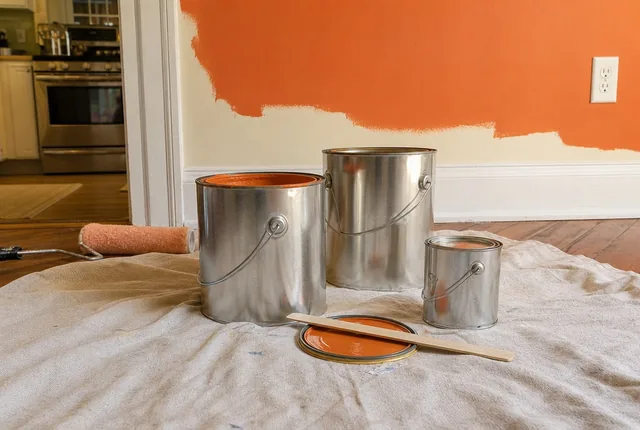 Problem-solving guideHow much paint do I really need?Work out gallons from wall area, coats and the coverage on the label, and see why a can runs out before the wall is done.Read the guide
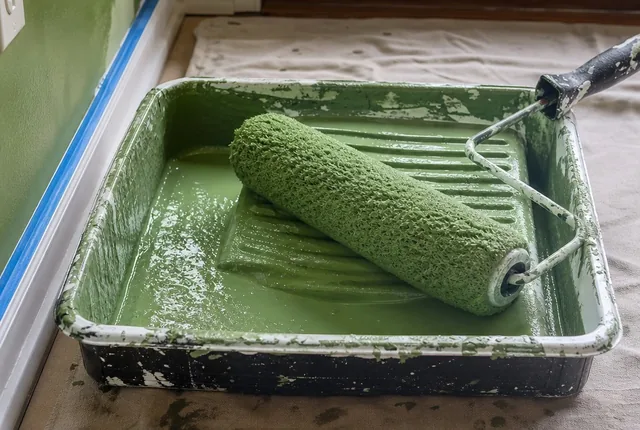 Know-howOne coat or two? Reading the coverage line on a paint canThe coverage on a can is square feet per gallon for one coat. Two coats double the paint. When one coat can do, and what a second costs in a bedroom.Read the guide
- Know-howHow much paint for a ceiling, trim and doorsMeasure a ceiling, baseboards, casings and doors in square feet, then turn them into gallons and quarts. With a 12 x 14 ft bedroom worked through.Read the guide
Related tools
 Chapter 03Bed size and room fit checkCheck all six mattress sizes against your room with walkways around the bed, then test the box spring against the door and hall turn.Open the tool
 Chapter 01Appliance and warranty logRecord each appliance's model number, serial number and purchase date, see which warranty ends next, and print a one-page log for the drawer.Open the tool
 Chapter 01HVAC filter size finder and replacement plannerTurn a nominal size like 16x25x1 into the filter's actual dimensions, or measure an old filter to find the size to buy, then plan the next change.Open the tool
 Chapter 03Sofa through the doorway fit checkCheck a sofa against your narrowest door and a hallway turn: upright, on its back or tilted on its end, with a printable measuring sheet.Open the tool
- Chapter 02All paint toolsPaint quantity tools built on coverage figures published by paint makers, plus a printable record of colors, codes and leftover cans.Open the chapter
Sources
- Paint Calculator, Sherwin-Williams. Checked October 10, 2026.
- Regal Select Interior Paint - Matte, Benjamin Moore. Checked October 5, 2026.
- Painting FAQs, Sherwin-Williams. Checked October 17, 2026.
See every source on the site on the sources page. Spotted an error? Tell us.