Chapter 03Fit · Know-how
How to measure a sofa's diagonal depth
Hold a yardstick against the side of the sofa so it touches the highest point of the back frame and the front of the arm at once. Hook a tape on the bottom back corner and find the shortest distance to the yardstick. That is the diagonal depth. If it is less than the door's clear width, the sofa can go through tilted on its end.
Source: Mid in Mod sofa delivery guide, checked October 10, 2026; James Reid measuring guide, checked October 10, 2026; La-Z-Boy Southeast doorway guide, checked October 6, 2026.
- Diagonal depth of a sofa 36 in deep and 32 in high, with 24 in arms31.2 in Arithmetic from the figures on this page
- Spare width one retailer suggests at the narrowest opening2 to 3 in Mid in Mod sofa delivery guide, October 10, 2026
- What to compare with the door on a piece without armsBack height Pottery Barn measuring guide, October 6, 2026
What diagonal depth tells you
When a sofa is tilted onto its end to go through a door, the side facing the opening is a slant, from the bottom back corner up to the line across the top of the back and the front of the arm. That slant is the diagonal depth. Pottery Barn and La-Z-Boy Southeast both say a sofa can go through when its depth, its height or its diagonal depth is less than the door's width.
Source: Pottery Barn measuring guide, checked October 6, 2026; La-Z-Boy Southeast doorway guide, checked October 6, 2026.
Product pages often list it as diagonal depth, or just DD. When the page leaves it out, or the sofa is already in your living room and has to go out again, you measure it yourself.
Source: Mid in Mod sofa delivery guide, checked October 10, 2026.
Measure it in five steps
Get a straightedge and a tape
A yardstick works, or any straight board longer than the sofa is deep. Lift out back cushions that come loose, so the edge sits on the frame.
Lay it across the side
Hold the straightedge against the side of the sofa so it touches the highest point of the back frame and the front of the arm at the same time.
Find the bottom back corner
It is the lowest corner at the back of the sofa, where the back of the frame ends.
Measure square to the straightedge
Hook the tape on that corner and swing it slowly along the straightedge. The shortest reading is the diagonal depth.
Write it down, rounded up
Note it to the nearest quarter inch and round up. Round the sofa up and the door down, and any error works for you.
Source: Mid in Mod sofa delivery guide, checked October 10, 2026; James Reid measuring guide, checked October 10, 2026.
Frame, not cushions
Both retailer guides put the straightedge on the highest point of the back frame. A plump back cushion can sit above the frame, so take loose cushions off before you measure.
Source: Mid in Mod sofa delivery guide, checked October 10, 2026; James Reid measuring guide, checked October 10, 2026.
Check your tape with three numbers
If the sofa is jammed in a corner and the straightedge is hard to hold, three numbers give a close check: the depth, the back height and the arm height. First find how long the straightedge is between its two touch points: square the depth, square the gap between back and arm height, add them and take the square root. Then multiply the depth by the back height and divide by that length.
For a sofa 36 in deep with a 32 in back and 24 in arms, the gap is 8 in, so the straightedge spans the square root of 1,296 plus 64, or 36.9 in. Then 36 times 32 is 1,152, and 1,152 divided by 36.9 is 31.2 in.
The shortcut assumes the top of the back sits right at the back of the sofa and the top of the arm runs right to the front. A sloped back or a rolled arm moves those points. When the tape and the math disagree, go with the tape.
Compare it with the door
Measure the door's clear opening with the door open all the way, from the face of the door to the stop on the far side. If the diagonal depth is smaller, the sofa can go through tilted on its end.
Source: Mid in Mod sofa delivery guide, checked October 10, 2026; La-Z-Boy Southeast doorway guide, checked October 6, 2026.
A diagonal depth just under the door width still makes a tight carry. Mid in Mod suggests 2 to 3 inches of spare width at the narrowest opening, for maneuvering and for the crew's hands.
Source: Mid in Mod sofa delivery guide, checked October 10, 2026.
The example sofa's 31.2 in diagonal depth is 0.8 in under a 32 in door. It passes the rule but falls well short of that margin, so plan to take the legs off and the door off its hinges before delivery day.
Let the tool do the arithmeticSofa through the doorway fit checkEnter the diagonal depth with the other three sizes and your door and hall widths. The check tries all three ways through, then the hall turn.Example: On its end, 1 in to spare (84 in sofa through a 32 in door)Open the toolNo arms, or no number on the page
Armless pieces skip the diagonal
Pottery Barn says not to use diagonal depth for a piece without arms, such as a wedge. Compare its back height with the door width instead.
Source: Pottery Barn measuring guide, checked October 6, 2026.
- No diagonal depth on the product page: ask the store for it before you order, and run the fit check with their number.
- A sectional: measure each piece on its own. Sectionals come in as separate pieces, so each one has its own diagonal depth.
- A sofa with a chaise or two different arms: measure from both sides and keep the larger number.
- Keep the number on your fit sheet next to the door widths. You will need it again when the sofa moves out.
Checklist to print
Get these done before you book the delivery:
- Straightedge longer than the sofa's depth, plus a tape
- Loose back cushions lifted out
- Straightedge on the top of the back frame and the front of the arm
- Shortest reading from the bottom back corner to the straightedge
- Number written down, rounded up to the quarter inch
- Cross-checked from depth, back height and arm height
- Door's clear width measured with the door open
- Spare width at the narrowest opening noted
- Armless piece: back height compared instead
Tips and tricks
- Tip 01
Have a helper hold the edge
One person keeps the straightedge on both touch points while the other swings the tape and reads it.
- Tip 02
Photograph the reading
A photo of the tape against the straightedge helps when you talk to the store or the delivery crew.
- Tip 03
Measure the old sofa too
If the old sofa goes out through the same door, its diagonal depth shows whether that path works and how to angle it.
- Tip 04
Measure from both sides
On a chaise, a sofa with one rolled arm, or a piece that has settled unevenly, the two sides can differ. Keep the larger reading.
What we would do
Measure it, check it with the math, then leave a margin
Lay the straightedge on the back frame and the arm, take the shortest reading from the bottom back corner, and round it up. Check it against the three-number shortcut. If it beats the door's clear width by less than the 2 to 3 inches Mid in Mod suggests, plan the legs-off and door-off steps before the truck comes.
Source: Mid in Mod sofa delivery guide, checked October 10, 2026.
Questions
What is the diagonal depth of a sofa?
It is the distance from the bottom back corner of the sofa to a straightedge laid from the top of the back frame to the front of the arm. It tells you whether the sofa can go through a door tilted on its end.
Source: James Reid measuring guide, checked October 10, 2026; Pottery Barn measuring guide, checked October 6, 2026.
How do I measure diagonal depth without a yardstick?
A long level or any straight board does the same job, as long as it touches the top of the back and the front of the arm at once. Or work it out from the depth, back height and arm height with the shortcut on this page.
Is diagonal depth smaller than the depth or the height?
It is never more than the back height, because the straightedge touches the top of the back. Whether it beats the depth depends on how low the arms are. A sofa 36 in deep and 32 in high with 24 in arms has a 31.2 in diagonal depth.
How much bigger should the door be than the diagonal depth?
The retailer rule only says the diagonal depth has to be smaller. Mid in Mod suggests 2 to 3 inches of spare width at the narrowest opening, for maneuvering and the crew's hands.
Source: La-Z-Boy Southeast doorway guide, checked October 6, 2026; Mid in Mod sofa delivery guide, checked October 10, 2026.
What if the diagonal depth is bigger than my door?
Then the sofa will not go through that door tilted on its end. Check the depth and height against the door too, then try the next steps: legs off, door off its hinges, or another way in.
Part of a system
This page is one part of a bigger job. The system page puts the parts in order.
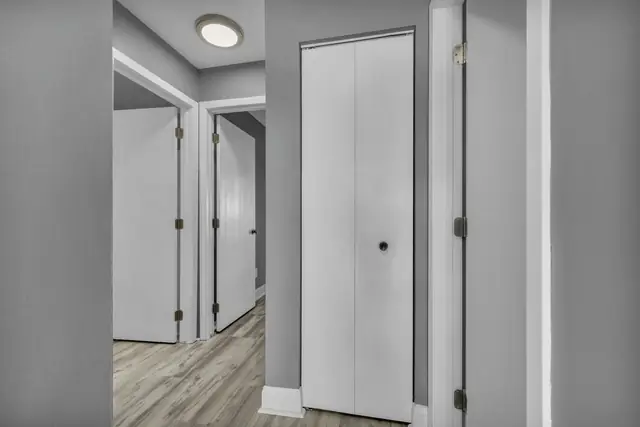
The tool and more guides
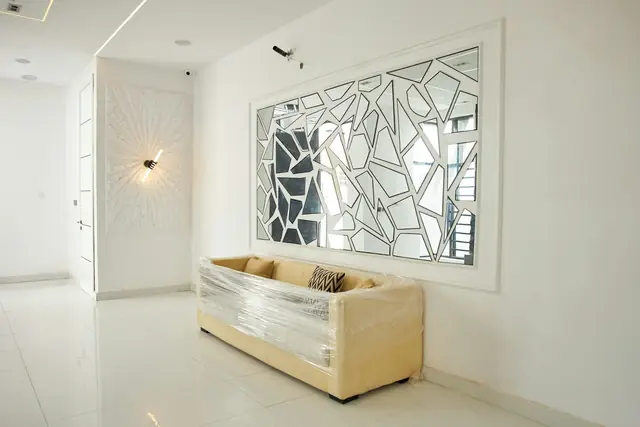 Chapter 03Sofa through the doorway fit checkCheck a sofa against your narrowest door and a hallway turn: upright, on its back or tilted on its end, with a printable measuring sheet.Open the tool
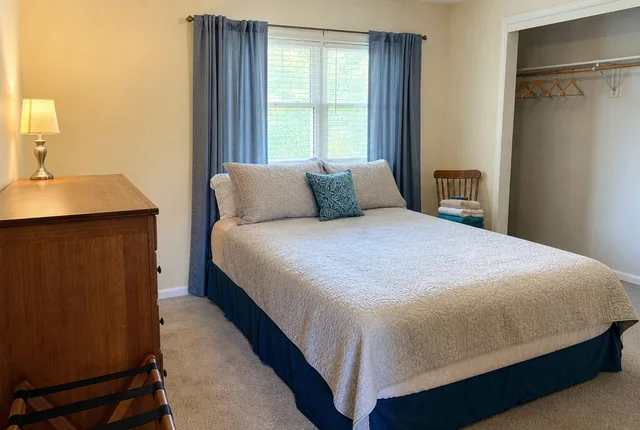 Practical noteGuest room checklist: a spare room ready for holiday guestsA week out, the day before and the last hour: measure the bed space, clear a drawer, write the Wi-Fi card and test the alarm. Printable checklist.Read the guide
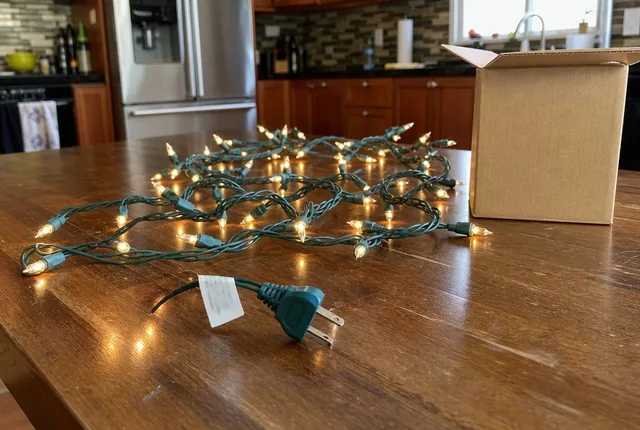 Know-howLit length, lead length and sets end to end: reading the boxWhy a 17.5 ft light set only lights 16.25 ft, how to find the lit length when the box hides it, and where to read how many sets connect end to end.Read the guide
- Chapter 03All fit toolsMeasuring tools for furniture: a doorway and hallway fit check, a bed size check for the room, and a printable sheet for every door and turn.Open the chapter
Sources
- How to Measure a Sofa for Delivery: The Complete Fit Guide, Mid in Mod. Checked October 10, 2026.
- Furniture Measuring Guide, James Reid Furniture. Checked October 10, 2026.
- How to Measure Your Doorway for Furniture Deliveries, La-Z-Boy Southeast. Checked October 6, 2026.
- How to Measure for Furniture Delivery, Pottery Barn. Checked October 6, 2026.
Every outside number on this page names its source and the date we checked it. See them all on the sources page. Spotted an error? Tell us.