Chapter 01Records · Practical note
Window and door draft check: a fall walk-through
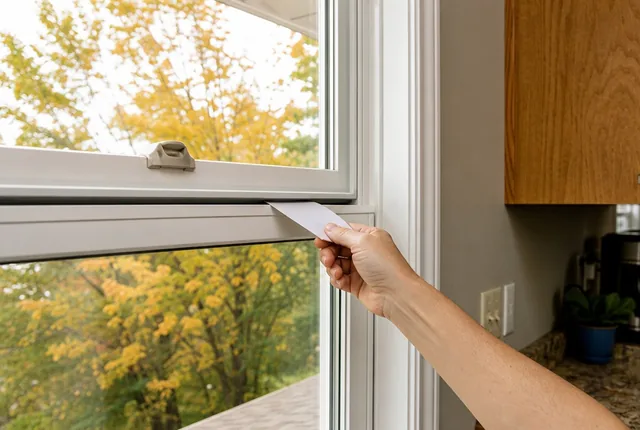
Walk every outside door and window on a cold, windy day. At each one, feel along the edges, then close it on a sheet of paper and pull. ENERGY STAR says that if the paper moves easily, the seal could be tighter. Write down the room, what you felt and the fix you plan. Plastic film over a window is an easy one-day job under $100 on ENERGY STAR's chart. Sealing behind the trim is moderate to difficult: book a pro if you'd rather not pull trim, and in a house built before 1978 read EPA's lead paint rules first.
Source: ENERGY STAR, seal behind window and door trim, checked October 9, 2026; ENERGY STAR, applying plastic over windows, checked October 9, 2026.
- Off yearly energy bills from sealing and insulating (ENERGY STAR)Up to 10% ENERGY STAR, seal and insulate, October 9, 2026
- The paper test, at each window and door1 sheet of paper ENERGY STAR, seal behind window and door trim, October 9, 2026
- Shrink film kit, an easy one-day jobUnder $100 ENERGY STAR, applying plastic over windows, October 9, 2026
Why walk it now
A draft is easy to find on the first cold, windy evening and easy to forget by the next morning. Walking the openings in one go, with a sheet in your hand, turns "the living room feels cold" into a list: which window, which edge, and what you plan to do about it. The fall home checklist has a row for drafty doors and windows. This page is the long version of that row.
The walk, opening by opening
Number every opening
Sketch each floor and give every outside door and window a number, starting at the front door. Count the basement and attic doors too.
Feel the edges
Close the door or window and run the back of your hand slowly along the sides, the top and the sill. Ready.gov lists caulking and weather stripping as ways to keep the cold out; the cold spots tell you where they're needed.
Do the paper test
Close the window or door on a sheet of paper and pull. ENERGY STAR says that if the paper slides back and forth easily, the window could be tighter, and thicker weather stripping is the fix. Try each side.
Look at the trim
Look for gaps between the trim and the wall, peeling paint around the frame, dust or insects getting in, and outside smells. ENERGY STAR lists each of these as a sign of a leak.
Write the line
Opening number, room, what you felt or saw, the paper result and the fix you plan. Leave a column for the date it's done.
Source: Ready.gov, winter weather, checked October 6, 2026; ENERGY STAR, seal behind window and door trim, checked October 9, 2026.
Let the tool do the arithmeticHVAC filter size finder and replacement plannerWhile you're walking the house, read the furnace filter size too. The finder turns the size on the frame into the actual size and the next change date.Example: 19.5 x 24.5 x 0.75 in (Actual size of a 20x25x1 filter)Open the toolPick a fix for each line
- Paper slides out, or the window rattles: thicker or new weather stripping on that sash or door.
- A window you won't open all winter: a shrink film kit. ENERGY STAR rates it easy, one day, under $100. Buy a kit as wide as the window and leave a few inches of film on each side.
- A gap behind the trim or around the frame: sealing behind trim means prying the trim off. ENERGY STAR rates it moderate to difficult and one to two days of work; a contractor does it in about one.
- Drafts everywhere, or high bills and no clear source: book a home energy assessment. Ask your utility first, since ENERGY STAR says many offer rebates for one.
Source: ENERGY STAR, seal behind window and door trim, checked October 9, 2026; ENERGY STAR, applying plastic over windows, checked October 9, 2026.
Before bigger sealing jobs
ENERGY STAR warns that sealing a house can make combustion appliances such as water heaters backdraft, and that a tight house may need more ventilation. Before you seal anything beyond doors and windows, have a home energy professional test for this. In a house built before 1978, read EPA's lead paint renovation rules before you cut or scrape trim paint.
Source: ENERGY STAR, identify problems you want to fix, checked October 9, 2026; ENERGY STAR, seal behind window and door trim, checked October 9, 2026.
Keep the list
File the sheet in the home records binder, behind the fall checklist. Next fall, walk the same numbered route and compare. A line that comes back two years running is the one to hand to a pro.
Checklist to print
Tick these off on one walk:
- Every outside door and window numbered on a sketch
- Edges felt with the back of a hand
- Paper test done on each side
- Trim checked for gaps, peeling paint and dust
- Each drafty opening on its own line
- A fix picked for each line
- Film kits sized to the window width
- Built before 1978: EPA lead paint page read first
- Bigger sealing: home energy pro booked first
- Sheet filed in the records binder
Tips and tricks
- Tip 01
Pick a windy evening
Drafts are easiest to feel when the wind is pushing on that side of the house. Walk the windward side first.
- Tip 02
Test more than one spot
A sash can seal at one corner and leak at the other. Do the paper test at the top, the middle and the bottom of each side.
- Tip 03
Number them like the alarms
Use the same sketch and numbering habit as the smoke alarm record, so a window number means the same window every year.
- Tip 04
Write the width on the line
ENERGY STAR says to buy a film kit that fits the width of the window, so measure it while you're standing there.
Source: ENERGY STAR, applying plastic over windows, checked October 9, 2026.
- Tip 05
Photograph the gap
A photo of the gap with a tape measure in it tells a contractor more than "the back door is drafty."
What we would do
Walk it this weekend, then fix the easy lines
Do the walk on the next cold, windy evening and write every line, even the small ones. Do the weather stripping and film lines yourself before the first hard freeze. Hand the trim lines and anything bigger to a home energy pro, after asking your utility about a rebate.
Questions
How do I find a draft around a window?
Close the window and feel the edges with the back of your hand, then close it on a sheet of paper and pull. ENERGY STAR says that if the paper moves back and forth easily, the window could be tighter.
Source: ENERGY STAR, seal behind window and door trim, checked October 9, 2026.
Is plastic window film worth it?
For a window you keep shut all winter, ENERGY STAR rates a shrink film kit an easy one-day job costing under $100. It cuts drafts, and you take it down when winter is over.
Source: ENERGY STAR, applying plastic over windows, checked October 9, 2026.
Should I seal behind the window trim myself?
ENERGY STAR rates it moderate to difficult and one to two days of work, because the trim comes off. If the house was built before 1978, read EPA's lead paint rules first. A contractor usually does it in a day.
Source: ENERGY STAR, seal behind window and door trim, checked October 9, 2026.
How much can sealing drafts save?
ENERGY STAR says sealing air leaks and adding insulation can save up to 10% on yearly energy bills. It also says door and window jobs may matter less to energy use than the attic and basement, but they are the easiest to reach.
Source: ENERGY STAR, seal and insulate, checked October 9, 2026; ENERGY STAR, seal behind window and door trim, checked October 9, 2026.
Can a house be sealed too tight?
ENERGY STAR warns that sealing can make combustion appliances such as water heaters backdraft, and a tight house may need more ventilation. A home energy professional tests for this before larger sealing jobs.
Source: ENERGY STAR, identify problems you want to fix, checked October 9, 2026.
Part of a system
This page is one part of a bigger job. The system page puts the parts in order.

The tool and more guides
 Chapter 01HVAC filter size finder and replacement plannerTurn a nominal size like 16x25x1 into the filter's actual dimensions, or measure an old filter to find the size to buy, then plan the next change.Open the tool
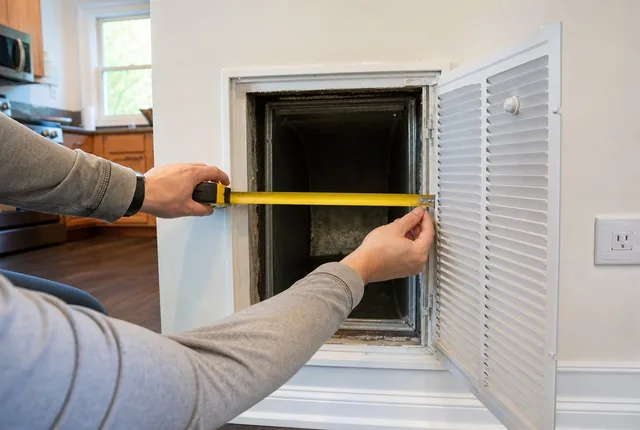 ProblemNo size printed on my air filter: how to find itThe print on the frame is gone or the slot is empty. Measure the opening, round to the nearest inch, and know when you need a custom size.Read the guide
 Practical noteWhat to change on move-in day: locks, garage opener and codesNew house, old keys. Here's the order to work in on move-in week: count what you got, change the locks, clear the garage opener, reset codes, then cut copies.Read the guide
- Chapter 01All records toolsPrintable home records with a calculator behind each one: appliance and warranty log, HVAC filter sizes and change dates.Open the chapter
Sources
- Seal Behind Window and Door Trim Project, ENERGY STAR (U.S. EPA and DOE). Checked October 9, 2026.
- Applying Plastic Over Windows Project, ENERGY STAR (U.S. EPA and DOE). Checked October 9, 2026.
- Seal and Insulate with ENERGY STAR, ENERGY STAR (U.S. EPA and DOE). Checked October 9, 2026.
- Winter Weather, Ready.gov (U.S. Department of Homeland Security, FEMA). Checked October 6, 2026.
- Identify Problems You Want to Fix, ENERGY STAR (U.S. EPA and DOE). Checked October 9, 2026.
Every outside number on this page names its source and the date we checked it. See them all on the sources page. Spotted an error? Tell us.