Chapter 05Calendar · System
Summer cooling-season record
Keep one page for the cooling season. Before it starts, write down the system's model and the year it went in, and book the check-up on the spring time change weekend, March 14, 2027, since ENERGY STAR says contractors get busy once summer comes. Each month, look at the filter and write the date. Through the summer, note the rooms that run hot, any humid, noisy or dusty spells, and each electric bill next to the same month last year. ENERGY STAR lists those as signs to call a contractor, and an air conditioner or heat pump past 10 years old is one too. Hand the page to the contractor at the next visit.
Source: NIST, daylight saving time rules, checked October 12, 2026; ENERGY STAR maintenance checklist, checked October 15, 2026; ENERGY STAR, when is it time to replace?, checked October 14, 2026.
- Spring time change: the weekend to book the check-upMar 14, 2027 NIST, daylight saving time rules, October 12, 2026; ENERGY STAR maintenance checklist, October 15, 2026
- Look at the filter and write the date (ENERGY STAR)Monthly ENERGY STAR maintenance checklist, October 15, 2026
- AC or heat pump past this age: a sign to call a contractor (ENERGY STAR)10 years ENERGY STAR, when is it time to replace?, October 14, 2026
Do it, skip it or get help
Keep the notes yourself
Writing down the model, looking at the filter, noting hot rooms and copying the bill takes a pen, a flashlight and a few minutes a month.
Skip the rows that aren't yours
Window units only? Skip the check-up and filter rows that don't apply and keep the hot rooms and the bills. No cooling at all: skip the page.
The work goes to a contractor or the landlord
The check-up, every repair and the question of replacing the system belong to a contractor, or to the landlord if you rent. This page keeps the notes they will ask for.
Source: ENERGY STAR maintenance checklist, checked October 15, 2026; ENERGY STAR, when is it time to replace?, checked October 14, 2026.
The steps, in order
Write down the system
Copy the model from the label on the indoor and outdoor units, and the year it was installed. ENERGY STAR says to know the model and its maintenance history before you call a contractor.
Have ready: Your appliance log or a phone photo of each label
Source: ENERGY STAR, 10 tips for hiring a heating and cooling contractor, checked October 14, 2026.
Book the check-up in spring
Call on the time change weekend, March 14, 2027, before the summer rush that ENERGY STAR warns about. The booking guide has the call card.
Have ready: The model, last year's invoice and your hot rooms list
Source: NIST, daylight saving time rules, checked October 12, 2026; ENERGY STAR maintenance checklist, checked October 15, 2026.
File the visit
Tick what the invoice says was done and write the date of the next visit. ENERGY STAR says to get a written proposal before any extra work starts.
Have ready: The invoice and the records binder
Source: ENERGY STAR, 10 tips for hiring a heating and cooling contractor, checked October 14, 2026.
Look at the filter every month
ENERGY STAR says to inspect, clean or change it once a month. Write the date in that month's row.
Have ready: The filter size and a spare
Source: ENERGY STAR maintenance checklist, checked October 15, 2026.
Note the hot rooms
When a room stays warm with the cooling on, write the room, the date and the time of day. ENERGY STAR lists rooms that are too hot as a sign to call a contractor.
Have ready: The page on the fridge and a pen beside it
Source: ENERGY STAR, when is it time to replace?, checked October 14, 2026.
Note humid, noisy or dusty spells
ENERGY STAR also lists air that is too humid in summer, a noisy system and a lot of dust. Write what you noticed and when. Don't diagnose it; the contractor does that.
Have ready: The notes column
Source: ENERGY STAR, when is it time to replace?, checked October 14, 2026.
Copy each electric bill
Put the amount next to the same month last year. ENERGY STAR names repairs that keep coming and bills that keep going up as a sign.
Have ready: Last summer's bills or the utility's online history
Source: ENERGY STAR, when is it time to replace?, checked October 14, 2026.
Close the season at the fall time change
On November 7, 2027, read the page through, note the system's age, and give the page to the contractor at the next check-up.
Have ready: The fall home checklist
Source: NIST, daylight saving time rules, checked October 12, 2026.
Print the working copy
One page, black and white, US Letter. Tick the boxes and write the dates in.
- Model and install year written down
- Filter size written down
- Check-up booked (get help)
- Check-up done, invoice filed
- Hurricane page read, if on a coast
What goes wrong
The check-up gets booked in the first heat wave
ENERGY STAR says contractors get busy once summer comes. A call in March comes before that.
Source: ENERGY STAR maintenance checklist, checked October 15, 2026.
The filter gets forgotten in July
ENERGY STAR says airflow problems can cut efficiency by up to 15 percent, and the filter is the airflow part you look after. A dated row each month keeps it from slipping.
Source: ENERGY STAR maintenance checklist, checked October 15, 2026.
The hot room story has no dates
"The back bedroom gets hot" gives the contractor little to go on. "Back bedroom, July 12, 4 to 7 pm, same setting" gives them a pattern, and ENERGY STAR lists hot rooms among the signs worth a call.
Source: ENERGY STAR, when is it time to replace?, checked October 14, 2026.
The bills climb and nobody compares
Without last year's same month next to this one, a rising bill looks like a hot summer. ENERGY STAR lists rising bills with frequent repairs as a sign to call.
Source: ENERGY STAR, when is it time to replace?, checked October 14, 2026.
Extra work gets agreed on the spot
ENERGY STAR's hiring tips say to sign a written proposal with costs, model numbers, schedule and warranty before work starts.
Source: ENERGY STAR, 10 tips for hiring a heating and cooling contractor, checked October 14, 2026.
When the steps change
Renting
Keep the hot rooms, filter (if it's yours) and notes rows. Ask the landlord when the check-up is booked, write their answer and the date you asked, and send your hot rooms list in writing.
Window or room units
No duct filter and often no contractor visit. Keep a row per unit with its model, the year you bought it, the rooms it cools and the hot spells.
On a hurricane coast
Ready.gov lists the Eastern Pacific season from May 15 and the Atlantic season from June 1. Add a row to read the Ready.gov page before your coast's season opens.
Source: Ready.gov, hurricanes, checked October 12, 2026.
Heat pump
The same system heats in winter, so the page doesn't end in fall. Carry the notes onto the fall checklist and hand both to the contractor at the fall check-up.
Tips and tricks
- Tip 01
Tape the page inside a kitchen cabinet door
You'll write the note when the pen is close to the hot room, not a week later.
- Tip 02
Photograph both labels once
The model and serial on your phone answer most of the contractor's first questions.
- Tip 03
Use the utility's online history
Most utilities show past bills online, so last summer's numbers take a minute to copy.
- Tip 04
Write the time, not just the day
Afternoon heat in one room points somewhere different from heat all day everywhere.
- Tip 05
Add 10 to the install year
Write that year at the top of the page. ENERGY STAR lists an air conditioner or heat pump past 10 years as a sign to call a contractor.
Source: ENERGY STAR, when is it time to replace?, checked October 14, 2026.
What we would do
Start the page on the March time change weekend
Fill in the model and install year, make the check-up call, then tape the page where you'll see it. Write one line a month through September and hand the page over at the next visit.
The tools and guides in this system
 Chapter 01HVAC filter size finder and replacement plannerTurn a nominal size like 16x25x1 into the filter's actual dimensions, or measure an old filter to find the size to buy, then plan the next change.Open the tool
 Chapter 05Home maintenance calendarPick your climate region, say whether you own or rent and tick what the house has. Get a year of household jobs by month and a year sheet to print.Open the tool
 Chapter 01Appliance and warranty logRecord each appliance's model number, serial number and purchase date, see which warranty ends next, and print a one-page log for the drawer.Open the tool
 Chapter 01Home service logTurn the last visit for your heating, cooling, chimney and septic service into the next due date and a book-by date, then print a log of who to call.Open the tool
 Practical noteBooking the cooling check-up: what to have ready before you callBook the spring AC check-up with the system's model, its service history and the rooms that run hot in front of you. Then write the date down.Read the guide
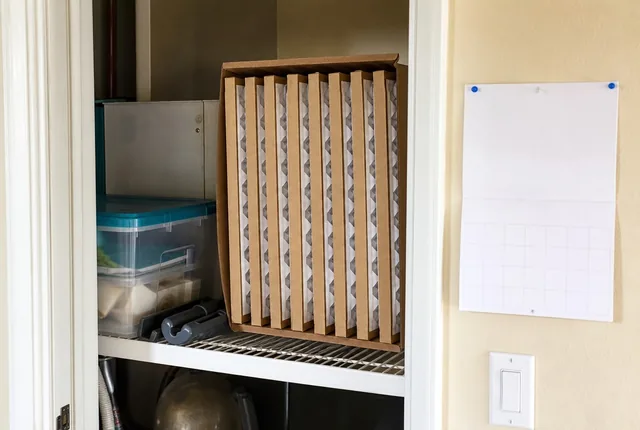 Practical noteHow many air filters to buy for a yearPlan on 4 to 6 filters a year for each filter slot, from the 60 to 90 day change range. Count your slots, check monthly and order by size.Read the guide
 Practical noteWhat to write down after a service visit: one line before the truck leavesThe tech is packing up. Get the company, the date, what they did, the invoice number and when to come back onto one line, and photograph the invoice.Read the guide
- Chapter 05All calendar toolsA home maintenance calendar for your climate region: the jobs to book, check and write down each month, for owners and renters, with a year sheet to print.Open the chapter
Questions
What should I keep track of for my AC over the summer?
The model and install year, the check-up date and invoice, the date you looked at the filter each month, the rooms that run hot with dates and times, any humid, noisy or dusty spells, and each month's electric bill next to last year's. ENERGY STAR lists those as signs worth telling a contractor about.
Source: ENERGY STAR maintenance checklist, checked October 15, 2026; ENERGY STAR, when is it time to replace?, checked October 14, 2026.
How old is too old for an air conditioner?
ENERGY STAR says it may be time to call a contractor when an air conditioner or heat pump is more than 10 years old. The contractor makes the call on repair or replacement; your page gives them the history.
Source: ENERGY STAR, when is it time to replace?, checked October 14, 2026.
How often should I check the AC filter in summer?
ENERGY STAR says to inspect, clean or change it once a month in a central air conditioner, furnace or heat pump.
Source: ENERGY STAR maintenance checklist, checked October 15, 2026.
Why does one room stay hot with the AC on?
That's for the contractor to find. ENERGY STAR says rooms that are too hot can come from how the equipment runs, the ducts or the insulation. Write the room, date and time so they have a pattern to look at.
Source: ENERGY STAR, when is it time to replace?, checked October 14, 2026.
I rent. Do I need this?
A shorter version. Keep the hot rooms and notes rows, ask the landlord about the check-up, and send your notes in writing with the date.
The primary source
When is it time to replace?, ENERGY STAR (U.S. EPA and DOE). Checked October 14, 2026.
The steps on this page follow this source. Other figures cite their own source where they appear.
Other sources on this page
- Daylight Saving Time Rules, National Institute of Standards and Technology (NIST). Checked October 12, 2026.
- Heating and Cooling Maintenance Checklist, ENERGY STAR (U.S. EPA and DOE). Checked October 15, 2026.
- 10 Tips for Hiring a Heating and Cooling Contractor, ENERGY STAR (U.S. EPA and DOE). Checked October 14, 2026.
- Hurricanes, Ready.gov (U.S. Department of Homeland Security, FEMA). Checked October 12, 2026.
See every source on the site on the sources page. Spotted an error? Tell us.