Chapter 01Records · Practical note
What to write down after a service visit
Before the tech leaves, write one line: the company and its phone number, the date, what they did in their words, the invoice number and when they say to come back. Photograph the invoice, keep the paper copy in one folder, and add the next date to your calendar. The FTC tells homeowners to keep all the paperwork for a job in one place and to log calls and conversations, and EPA tells septic owners to keep the maintenance records for work done on the system.
Source: FTC, Hiring a Contractor, checked October 11, 2026; EPA How to care for your septic system, checked October 11, 2026.
- FTC: keep all the paperwork for a job togetherOne place FTC, Hiring a Contractor, October 11, 2026
- EPA: septic owners keep records of work doneKeep records EPA How to care for your septic system, October 11, 2026
- Service, company, date, what was done, invoice, next dueSix boxes Arithmetic from the figures on this page
Why the line matters next year
A year from now you'll want to book the same company, and you'll want to know what they did last time. The invoice is in a drawer somewhere, the tech's name is gone, and the phone number is buried in your call history. One line written on the day saves that search.
It also helps when you sell the house, change companies, or call back about the same problem. The FTC's advice to homeowners is to keep all the paperwork for a job in one place, keep a log of calls and conversations, and take photos as the work goes on, because those records matter if something goes wrong during or after the job.
Source: FTC, Hiring a Contractor, checked October 11, 2026.
The six boxes
Service
Heating check-up, cooling check-up, chimney, septic inspection, carpet cleaning. Use the same name every time so the rows line up.
Company and phone
The name on the truck or the invoice, and the number you'd call to book. The tech's first name is optional, but some people like to ask for the same person.
Date of the visit
The day they came, not the day you paid or booked. This is the date the next one counts from.
What was done
Copy it from the invoice or ask the tech to say it in a few words. Write their words, not your guess, and note any part they replaced by its name on the invoice.
Invoice number
It's the fastest way for the company to find your visit when you call back. If there's no number, write the total and the date.
Next due
Ask before they leave: when do you want to see this again? Write the month they give you. If they don't say, the home service log uses the published interval for that service.
Write what they said, not what you think
If the tech mentions something they want to look at next time, write it in their words with the date. Don't judge it on the log. The line is a record of the visit, and any question about the system goes back to the company.
Copy it from the invoice
Most of the line is already printed on the invoice: the company and phone at the top, the date, the work description and the invoice number. Copy those across while the paper is in your hand. Only the next due date usually has to come from the tech.
Where the paper goes
- Take a photo of the invoice, front and back, before you put it away. Put the invoice number in the photo's name or caption if your phone allows it.
- Put the paper copy in one folder or binder section for service visits, newest at the front.
- If a part was replaced under a warranty, keep that paperwork with the product's receipt. The FTC says to save the receipt with the warranty because it shows the purchase date.
- Add the next due date to your calendar about four weeks early, so there's time to book.
Source: FTC, Warranties, checked October 9, 2026.
If you missed the line
Look for the invoice in your email or the company's app, or call and ask for the date of your last visit. Most companies can look you up by address or phone number. Write the line from that, and mark it as filled in later.
Checklist to print
Before the tech leaves, and right after:
- Ask when they want to come back
- Write the service name, same as last time
- Write the company name and booking phone
- Write the date of the visit
- Copy what was done from the invoice
- Write the invoice number
- Write the next due month
- Photograph the invoice, front and back
- File the paper copy in the service folder
- Keep warranty paperwork with the receipt
- Add the next due date to your calendar
Tips and tricks
- Tip 01
Ask the next-due question at the door
It's the one box the invoice usually doesn't fill, and it's easiest to ask while the tech is still there.
- Tip 02
Same service name every time
Pick one name per row, like heating check-up, and stick to it. Then a quick look down the column shows every visit for that system.
- Tip 03
No paper invoice? Photograph the screen
If the invoice goes into the tech's tablet and the copy arrives by email, take a photo of the screen, so you have a copy even if the email gets buried.
- Tip 04
Log the calls too
If you call back about the same visit, add the date and who you spoke to under that line. The FTC suggests a log of calls and conversations for any job.
Source: FTC, Hiring a Contractor, checked October 11, 2026.
What we would do
Write the line before the truck pulls away
Keep the printed log and a pen in the folder where invoices go. When the tech hands you the invoice, ask when to book the next visit, copy the line across, photograph the invoice and file it. Next year, the line is there when you go to book.
Questions
What home maintenance records should I keep?
For each visit: the company and phone, the date, what was done, the invoice number and when to come back, plus the invoice itself. The FTC tells homeowners to keep all the paperwork for a job in one place, and EPA tells septic owners to keep records of the work done on the system.
Source: FTC, Hiring a Contractor, checked October 11, 2026; EPA How to care for your septic system, checked October 11, 2026.
Do I need to write down the technician's name?
No. The company name, phone and invoice number are enough to find the visit later. Some people add the tech's first name if they want to ask for the same person next time.
Should I keep the paper invoice if I have a photo?
Keeping both is simplest: the photo for quick lookup, the paper in one folder. If a part was covered by a warranty, keep that paperwork with the product's receipt, as the FTC suggests.
Source: FTC, Warranties, checked October 9, 2026.
What if the tech doesn't say when to come back?
Ask. If there's still no answer, the home service log uses the published interval for heating, cooling, chimney and septic rows, and you can set your own interval for anything else.
Should I write down what the tech said was wrong?
Write what they said, in their words, with the date. Don't add your own judgment. Any question about what it means goes back to the company.
Part of a system
This page is one part of a bigger job. The system page puts the parts in order.
 SystemSummer cooling-season recordOne printable page for the cooling season: the AC model and age, the spring check-up, a filter date each month, hot rooms and bills to show the contractor.8 steps · 7 parts · 1 page to printOpen the system
 SystemWho to call: household contacts and service history on one pageKeep one page of who you call for heating, cooling, chimney, septic and the rest, with each visit dated, its invoice number and the next date to book.9 steps · 3 parts · 1 page to printOpen the system
The tool and more guides
 Chapter 01Home service logTurn the last visit for your heating, cooling, chimney and septic service into the next due date and a book-by date, then print a log of who to call.Open the tool
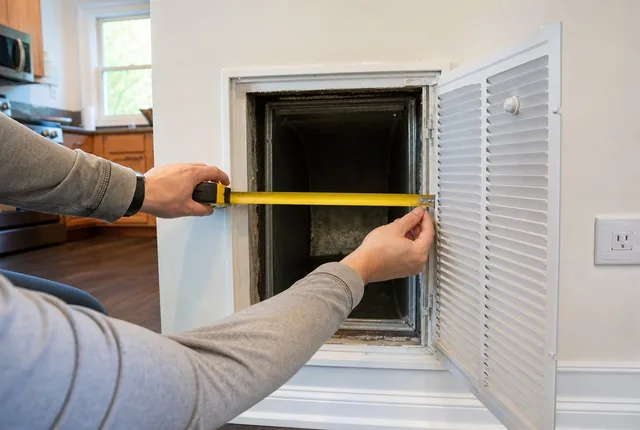 ProblemNo size printed on my air filter: how to find itThe print on the frame is gone or the slot is empty. Measure the opening, round to the nearest inch, and know when you need a custom size.Read the guide
 Practical noteWhat to change on move-in day: locks, garage opener and codesNew house, old keys. Here's the order to work in on move-in week: count what you got, change the locks, clear the garage opener, reset codes, then cut copies.Read the guide
- Chapter 01All records toolsPrintable home records with a calculator behind each one: appliance and warranty log, HVAC filter sizes and change dates.Open the chapter
Sources
- Hiring a Contractor (consumer brochure), Federal Trade Commission (FTC), consumer.ftc.gov. Checked October 11, 2026.
- How to Care for Your Septic System, U.S. Environmental Protection Agency. Checked October 11, 2026.
- Warranties, Federal Trade Commission (FTC), Consumer Advice. Checked October 9, 2026.
Every outside number on this page names its source and the date we checked it. See them all on the sources page. Spotted an error? Tell us.