Chapter 01Records · Know-how
How often each home service is due
Heating and cooling: a contractor check-up once a year each, cooling in spring and heating in fall, per ENERGY STAR. Chimney and heating equipment: cleaned and inspected by a professional every year, per the U.S. Fire Administration. Household septic system: inspected at least every three years, and yearly for systems with pumps or float switches, per EPA. Pumping depends on what the inspector finds. Count each one from the date of the last visit and book a few weeks early.
Source: ENERGY STAR maintenance checklist, checked October 15, 2026; USFA heating fire safety, checked October 11, 2026; EPA How to care for your septic system, checked October 11, 2026.
- Heating in fall, cooling in spring (ENERGY STAR)Yearly ENERGY STAR maintenance checklist, October 15, 2026
- Chimney and heating equipment cleaned and inspected (USFA)Every year USFA heating fire safety, October 11, 2026
- At most between household septic inspections (EPA)3 years EPA How to care for your septic system, October 11, 2026
The short version
- Heating system: a contractor check-up once a year, in fall. ENERGY STAR says contractors get busy once winter comes, so fall is the time to book.
- Cooling system: a contractor check-up once a year, in spring, before the summer rush.
- Chimney and heating equipment: cleaned and inspected by a professional every year, per the U.S. Fire Administration.
- Household septic system: inspected at least every three years. EPA says systems with electrical float switches, pumps or other mechanical parts should be inspected more often, generally once a year.
- Septic pumping: EPA puts household tanks at typically every three to five years. The inspector tells you when yours is due.
Source: ENERGY STAR maintenance checklist, checked October 15, 2026; USFA heating fire safety, checked October 11, 2026; EPA How to care for your septic system, checked October 11, 2026.
Count from the last visit
Each service is due one interval after the last time someone came, not on a fixed date. If the heating check-up was on October 14 last year, it's due around October 14 this year. If you skipped a year, it's due now.
Find the last visit date
It's on the invoice, in the company's email or app, or on your service log. If you can't find one, treat the service as due now.
Add the interval
One year for heating, cooling and the chimney. Up to three years for a household septic inspection, or one year if the system has pumps or float switches.
Book a few weeks early
The home service log puts a book-by date about four weeks before each due date. That's our planning habit, not a published rule, and you can book earlier in busy seasons.
Write the new date down
After the visit, the new date becomes the start of the next count. Write it on the log the same day.
Use the time changes as reminders
ENERGY STAR suggests planning the heating and cooling check-ups around the spring and fall time changes. In 2026, daylight saving time started on March 8 and ends on November 1, so the cooling call goes in around early March and the heating call before November.
Source: ENERGY STAR maintenance checklist, checked October 15, 2026; NIST, daylight saving time rules, checked October 12, 2026.
Your manual and your company come first
The published intervals are the general rule. If your equipment's manual or your service company gives a different schedule, use theirs and write it on the log. This page sets dates only. What a visit should include, and whether anything needs fixing, is for the contractor.
Septic runs on a longer clock
A septic inspection isn't yearly for most homes, which makes it the easiest one to forget. EPA says at least every three years for a typical household system. Pumping is separate: EPA says tanks are typically pumped every three to five years, and the inspector tells you when. Write the date they give you in the next due box, and keep the records of each visit, as EPA asks.
Source: EPA How to care for your septic system, checked October 11, 2026.
Services with no published interval
Carpet cleaning, window washing, pest visits on a contract, lawn service: these follow your contract or your own habit. Add them as your own rows with the number of months you want between visits, and the log counts them the same way.
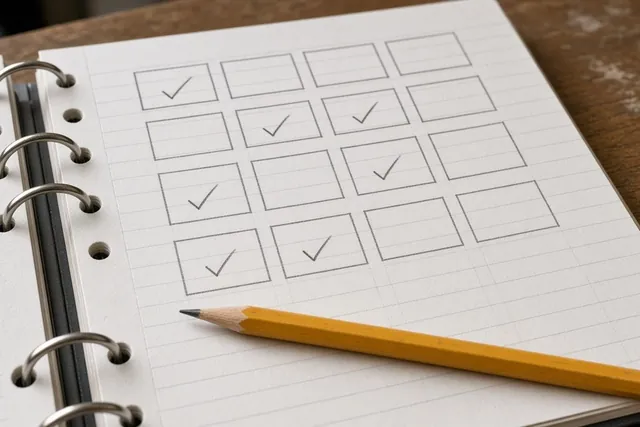
Checklist to print
Do this once, then after each visit:
- Find the last heating check-up date
- Find the last cooling check-up date
- Find the last chimney visit date
- Find the last septic inspection date
- Ask whether the septic system has a pump
- Mark any service with no record as due now
- Add your own rows: carpet, windows, lawn
- Put each book-by date on your calendar
- Check the manual for a different schedule
- Write the new date down after every visit
Tips and tricks
- Tip 01
Book in the quiet season
ENERGY STAR notes that contractors get busy once summer and winter come. A spring cooling call and an early fall heating call are easier to get on the calendar.
Source: ENERGY STAR maintenance checklist, checked October 15, 2026.
- Tip 02
Put the chimney with the heating call
Both are yearly and both belong before the heating season. Book them in the same week so one reminder covers both.
- Tip 03
Ask if your septic system has a pump
EPA moves systems with pumps, float switches or other mechanical parts to a yearly inspection. If you don't know which kind you have, ask the inspector and note it on the log.
Source: EPA How to care for your septic system, checked October 11, 2026.
- Tip 04
No date found? Start the clock now
If there's no record of the last visit, book one and let that date start the count.
What we would do
Set up the four rows once, then follow the dates
Find the last visit date for heating, cooling, chimney and septic, put them in the home service log, and print the sheet. Put the book-by dates on your calendar. After each visit, write the new date down the same day, and the log counts the next one from there.
Questions
How often should a furnace be serviced?
Once a year, by a contractor. ENERGY STAR suggests the heating check-up in fall, before contractors get busy for winter.
Source: ENERGY STAR maintenance checklist, checked October 15, 2026.
How often should an air conditioner be serviced?
Once a year, in spring, per ENERGY STAR. The spring time change is a handy reminder to book it.
Source: ENERGY STAR maintenance checklist, checked October 15, 2026.
How often should a chimney be inspected?
Every year. The U.S. Fire Administration says to have heating equipment and chimneys cleaned and inspected by a professional each year.
Source: USFA heating fire safety, checked October 11, 2026.
How often does a septic system need to be inspected?
EPA says at least every three years for a household system, and generally once a year for systems with pumps, float switches or other mechanical parts.
Source: EPA How to care for your septic system, checked October 11, 2026.
How often should a septic tank be pumped?
EPA says household tanks are typically pumped every three to five years. The inspector tells you when yours is due; write that date on your log.
Source: EPA How to care for your septic system, checked October 11, 2026.
What if my manual says something different?
Follow the manual or your service company's schedule, and write their interval on the log. The general intervals here are for when you have nothing more specific.
Part of a system
This page is one part of a bigger job. The system page puts the parts in order.

The tool and more guides
 Chapter 01Home service logTurn the last visit for your heating, cooling, chimney and septic service into the next due date and a book-by date, then print a log of who to call.Open the tool
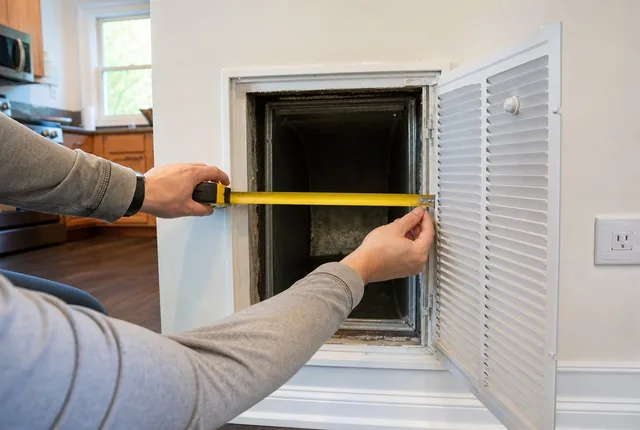 ProblemNo size printed on my air filter: how to find itThe print on the frame is gone or the slot is empty. Measure the opening, round to the nearest inch, and know when you need a custom size.Read the guide
 Practical noteWhat to change on move-in day: locks, garage opener and codesNew house, old keys. Here's the order to work in on move-in week: count what you got, change the locks, clear the garage opener, reset codes, then cut copies.Read the guide
- Chapter 01All records toolsPrintable home records with a calculator behind each one: appliance and warranty log, HVAC filter sizes and change dates.Open the chapter
Sources
- Heating and Cooling Maintenance Checklist, ENERGY STAR (U.S. EPA and DOE). Checked October 15, 2026.
- Heating fire safety outreach materials, U.S. Fire Administration (FEMA). Checked October 11, 2026.
- How to Care for Your Septic System, U.S. Environmental Protection Agency. Checked October 11, 2026.
- Daylight Saving Time Rules, National Institute of Standards and Technology (NIST). Checked October 12, 2026.
Every outside number on this page names its source and the date we checked it. See them all on the sources page. Spotted an error? Tell us.