Chapter 05Calendar · Tool and printable record
How much water and food do you need for a power outage?
Keep one gallon of water per person per day. The Red Cross list says two weeks of it at home and three days in a bag you can carry out, so a family of four needs 56 gallons at home and 12 in the bag. Count food the same way, by people times days, and keep a flashlight for each person. Water you bottle yourself gets replaced every six months, and the whole kit gets a look once a year.
Source: Ready.gov, Water, checked October 17, 2026; American Red Cross, survival kit supplies, checked October 17, 2026; Ready.gov, Power Outages, checked October 18, 2026; Ready.gov, Build a Kit, checked October 18, 2026.
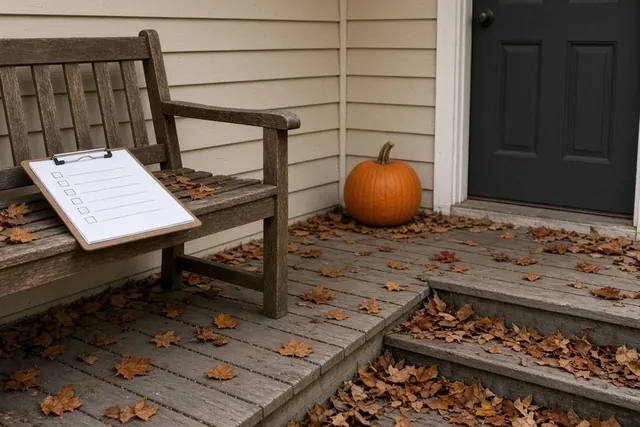
Outage supply planner
Result 56 gal of water at home, 12 in the go-bag
- Water rate
- 1 gal a person a day, for drinking and washing
- Home supply, 14 days
- 4 people × 14 = 56 gal: 56 one-gallon jugs or 425 bottles of 16.9 fl oz. Food for 56 person-days.
- Go-bag, 3 days
- 4 people × 3 = 12 gal: 12 one-gallon jugs or 91 bottles of 16.9 fl oz. Food for 12 person-days.
- Light
- 4 flashlights, one for each person, and a battery or hand-crank radio
- Home-filled water
- Filled November 1, 2026, replace by May 1, 2027
- Whole kit
- Checked November 1, 2026, look it over again by November 1, 2027
Home: ____________________ · List made: __________ · Kit kept: ____________________
| Item | Home | Go-bag | Have | Use-by or check date |
|---|---|---|---|---|
| Water | 56 gal | 12 gal | ||
| Non-perishable food | 56 person-days | 12 person-days | ||
| Manual can opener | 1 | 1 | ||
| Flashlight, one per person | 4 | 4 | ||
| Battery or hand-crank radio (NOAA) | 1 | |||
| Spare batteries (write the size) | a set per device | a set per device | ||
| Phone chargers and a backup battery | 1 per phone | 1 per phone | ||
| First aid kit | 1 | 1 | ||
| Whistle | 1 | |||
| Wipes, garbage bags, plastic ties | 1 pack each | 1 pack each | ||
| Blanket or sleeping bag, one per person | 4 | |||
| Cash | some | |||
| Document copies, waterproof pouch | 1 | |||
| Contact list on paper | 1 | 1 | ||
| Local map | 1 | |||
| Spare house and car keys | 1 set | |||
| Pet food, extra water, leash, carrier (1 pet) | 14 days | 3 days | ||
Things in the home that need power (phones, a cordless phone base, a garage door, anything plugged in all day): write each one on a blank row, with how it runs during an outage or a note that it won't.
How to use this, in plain words
Count everyone who lives in the home, and any pets. Tick the box if there is a baby.
Keep the Red Cross days (two weeks at home, three in the go-bag) or type your own.
Look at what you already have: jugs, cases of bottles, flashlights, a radio. Write the dates printed on them.
Add the day you filled your own jugs and the day you last went through the kit. The tool gives both next dates.
Print the list, tick what you have, and buy the rest a few items at a time.
Before you start
- Note 01
Pick one place for the kit
Ready.gov says to keep the kit in one place that everyone in the home knows. A closet near the door works for the go-bag.
- Note 02
Count jugs, not cases
A case of 24 small bottles (16.9 fl oz each) looks like a lot and holds about 3.2 gallons. Work in gallons first, then turn them into bottles.
- Note 03
Write the battery sizes down
Flashlights and radios take different batteries. Put the size next to each one on the list so the spares match.
- Note 04
List what needs power
Ready.gov's outage page starts with an inventory of the things you rely on that need electricity. Phones, a cordless phone base and a garage door are easy to forget.
Source: Ready.gov, Build a Kit, checked October 18, 2026; Ready.gov, Power Outages, checked October 18, 2026.
How it works
- Water: people × days × 1 gallon, for drinking and washing. Ready.gov and the Red Cross both use one gallon per person per day.
- Very hot weather: Ready.gov says water needs can double, so the tick box uses 2 gallons per person per day.
- Days: 14 for the home supply and 3 for the go-bag, from the Red Cross list. Ready.gov only says several days, so both numbers can be changed.
- Bottles: gallons × 128 ÷ 16.9, rounded up, for the common 16.9 fl oz (500 mL) bottle. One-gallon jugs are just the gallons rounded up.
- Food: people × days, written as person-days. The list counts days of food and leaves what goes in the cupboard to you.
- Light: one flashlight for each person in the home, plus a battery or hand-crank radio.
- Dates: water you bottled yourself is replaced 6 months after the fill date, and the whole kit is looked over 12 months after the last check.
Source: Ready.gov, Water, checked October 17, 2026; American Red Cross, survival kit supplies, checked October 17, 2026; Ready.gov, Build a Kit, checked October 18, 2026; Ready.gov, Power Outages, checked October 18, 2026.
Worked example
Four people and a dog in a house that loses power a few times each winter. They want the Red Cross amounts, two weeks at home and three days in a go-bag. On the fall time change weekend they fill their own water jugs and go through the whole kit.
- 4 people at 1 gal a person a day. The home supply covers 14 days: 4 × 14 = 56 gal, or 56 one-gallon jugs.
- The go-bag covers 3 days: 4 × 3 = 12 gal. In 16.9 fl oz bottles that is 12 × 128 ÷ 16.9 = 91 bottles, so a few cases.
- Food is counted in person-days: 56 at home and 12 in the bag. The list leaves the menu to you.
- 4 flashlights, one each, plus a radio and a spare set of batteries for every device. The dog gets its own row for food, water, a leash and the carrier.
- The water jugs were filled at home on November 1, 2026, so they are due to be replaced by May 1, 2027. The whole kit gets its next look by November 1, 2027.
If the answer surprises you
Two weeks of water is a lot
Four people for 14 days is 56 gallons, more than most pantries hold. Start with the 12-gallon go-bag and add jugs over a few shopping trips.
Source: American Red Cross, survival kit supplies, checked October 17, 2026.
The hot weather box doubles it
Ready.gov says water needs can double in very hot weather, so the same family needs 112 gallons for two weeks of summer outage.
Source: Ready.gov, Water, checked October 17, 2026.
Water from the tap has a date too
Jugs you filled yourself are due for fresh water every six months, even when they look fine.
Source: Ready.gov, Water, checked October 17, 2026.
What to record
The printed list keeps the counts, where things are and the check dates on one page. Tape it inside the closet door or the lid of the bin:
- Each item, with how many for the home supply and how many for the go-bag
- A Have column to tick as you buy or find each item
- Use-by or check date for water, food and batteries
- Where the home supply and the go-bag are kept, so everyone knows
- Things in the home that need power, and how each one runs when the power is out
- The date the list was made, to compare at the next yearly check
Variants
Apartment with little storage
Start with the go-bag amounts, then build toward the home supply a few jugs at a time. Under a bed or the bottom of a closet holds more jugs than a kitchen shelf.
Very hot summers
Where outages come in a heat wave, tick the hot weather box. Ready.gov says water needs can double, so the tool counts 2 gallons per person per day.
Source: Ready.gov, Water, checked October 17, 2026.
A baby or pets in the home
Each gets its own row for the same number of days: formula, bottles, diapers and wipes for a baby; food, extra water, a leash and the carrier for a pet.
Source: Ready.gov, Build a Kit, checked October 18, 2026; American Red Cross, survival kit supplies, checked October 17, 2026.
Numbers this tool uses
- Water per personOne gallon a day, for drinking and washing Ready.gov, Water, October 17, 2026
- Home supplyTwo weeks American Red Cross, survival kit supplies, October 17, 2026
- Go-bagThree days American Red Cross, survival kit supplies, October 17, 2026
- Very hot weatherWater needs can double Ready.gov, Water, October 17, 2026
- Water you bottle yourselfReplace every six months Ready.gov, Water, October 17, 2026
- FlashlightsOne for every household member Ready.gov, Power Outages, October 18, 2026
Limitations
- Planning estimate; check the manufacturer's date on bottled water, food and batteries, and the advice of your local emergency office.
- This page counts supplies and keeps dates. Medicines, medical devices that need power and refrigerated medicine are left off the list; Ready.gov's outage page sends those questions to your medical provider.
- Generators, camp stoves, heaters and anything that burns fuel are not covered here. Follow the maker's instructions and the Ready.gov power outage page for those.
Tips and tricks
- Tip 01
Use the time changes as reminders
The clocks change in March and November. Refill the water on one and check the kit on the other, and the dates come around on their own.
- Tip 02
Keep the go-bag light enough to carry
Three days of water for four people is 12 gallons, which is heavy. Split it across two or three bags, or keep part of it in the car.
- Tip 03
Write dates on the jugs
A marker date on each jug you fill at home means nobody has to guess which ones are due.
- Tip 04
Tape the list inside the lid
Whoever opens the bin in the dark sees what should be there and what is missing.
What we would do
Build the go-bag first, then the home supply
Run the tool, print the list, and finish the go-bag column first: it is small and covers the case where you have to leave. Then grow the home supply toward two weeks a few jugs at a time. Write the fill date on every jug and put the next check on the calendar.
Source: American Red Cross, survival kit supplies, checked October 17, 2026.
Questions
How much water should I store per person?
One gallon per person per day, for drinking and washing. Ready.gov and the Red Cross both use that figure. In very hot weather Ready.gov says needs can double.
Source: Ready.gov, Water, checked October 17, 2026; American Red Cross, survival kit supplies, checked October 17, 2026.
How much water for a family of four for two weeks?
56 gallons: 4 people × 14 days × 1 gallon. That is 56 one-gallon jugs or about 425 bottles of 16.9 fl oz. The three-day go-bag takes 12 more gallons.
Source: Ready.gov, Water, checked October 17, 2026; American Red Cross, survival kit supplies, checked October 17, 2026.
How long does stored water last?
Ready.gov says to replace water you bottled yourself every six months. Store-bought water stays sealed in its original container in a cool, dark place; use the date printed on it.
Source: Ready.gov, Water, checked October 17, 2026.
What is the difference between a go-bag and a home supply?
The go-bag is what you carry out if you have to leave: the Red Cross says three days of water and food. The home supply is for staying put through a long outage: two weeks.
Source: American Red Cross, survival kit supplies, checked October 17, 2026.
How often should I check my emergency kit?
Ready.gov says to replace expired items as needed and to rethink your needs every year. The tool sets the next check 12 months after the last one.
Source: Ready.gov, Build a Kit, checked October 18, 2026.
Part of a system
This page is one part of a bigger job. The system page puts the parts in order.

Guides that go deeper
 Know-howHow much water to store, and where it fitsOne gallon a person a day: 56 gallons for four people over two weeks, 12 in the go-bag. Where to keep it, and the dates to write on it.Read the guide
 Practical notePower outage checklist: what to write down before the next stormList what runs on power, count a flashlight per person, note battery sizes, phone backup and numbers to call, and tape it inside the kit.Read the guide
 Practical noteBooking the cooling check-up: what to have ready before you callBook the spring AC check-up with the system's model, its service history and the rooms that run hot in front of you. Then write the date down.Read the guide
Related tools
- Chapter 05Home maintenance calendarPick your climate region, say whether you own or rent and tick what the house has. Get a year of household jobs by month and a year sheet to print.Open the tool
 Chapter 01Smoke and CO alarm plannerCount smoke and CO alarms level by level from NFPA's placement list, then get the replace-by date and the next battery change for your alarms.Open the tool
 Chapter 01Home inventory sheetList what you own room by room, with what you paid, serial numbers and which items have a photo. See each room's total and print a one-page sheet.Open the tool
- Chapter 05All calendar toolsA home maintenance calendar for your climate region: the jobs to book, check and write down each month, for owners and renters, with a year sheet to print.Open the chapter
Sources
- Water, Ready.gov (U.S. Department of Homeland Security, FEMA). Checked October 17, 2026.
- Survival Kit Supplies, American Red Cross. Checked October 17, 2026.
- Power Outages, Ready.gov (U.S. Department of Homeland Security, FEMA). Checked October 18, 2026.
- Build A Kit, Ready.gov (U.S. Department of Homeland Security, FEMA). Checked October 18, 2026.
See every source on the site on the sources page. Spotted an error? Tell us.