Chapter 01Records · Tool and printable record
What size water heater do you need for your household?
Size a tank water heater by its first hour rating, not the tank size. Add up the hot water used in your household's busiest hour, at about 20 gallons a shower, 14 a dishwasher load and 32 a clothes washer load. Then look for a first hour rating at least that big. The rating is printed on the yellow EnergyGuide label next to the tank size.
Source: PNNL Building America, DHW First Hour Rating, checked October 19, 2026; 16 CFR 305.17, EnergyGuide label content, checked October 20, 2026.
Water heater capacity estimator
Result Busiest hour: 59 gal of hot water
- Peak hour demand
- 2 × 20 gal + 1 × 4 gal + 1 × 5 gal + 2 × 4 gal + 1 × 2 gal = 59 gal. That sits in the medium band on the EnergyGuide label, so look for a first hour rating of at least 59 gal.
- Your heater's label
- First hour rating 62 gal (medium): it covers this hour with 3 gal to spare.
- Tankless check
- 2 showers + 1 sink at once = 6 gpm (high on the label scale)
- Average-life mark
- Installed June 15, 2016, 13 years on is June 15, 2029
| Use | Hot water each | Times | Total |
|---|---|---|---|
| Showers | 20 gal | 2 | 40 gal |
| Dishes by hand | 4 gal | 1 | 4 gal |
| Cooking and food prep | 5 gal | 1 | 5 gal |
| Face and hand washing | 4 gal | 2 | 8 gal |
| Shaves at a sink | 2 gal | 1 | 2 gal |
| Peak hour demand | 59 gal |
Home: ____________________ · Record made: __________
| Brand | |
|---|---|
| Model number | |
| Serial number | |
| Fuel or power, as printed | |
| Tank size (storage capacity) | |
| First hour rating, or gpm for tankless | |
| Install date | |
| Installed by (company, phone) | |
| Warranty, years on the label | |
| Where it is, and how to reach it |
| Date | Who came | What they did or said | Next date |
|---|---|---|---|
How to use this, in plain words
Pick your busiest hour of hot water in a normal week, often a weekday morning or bath time.
Count each use in that hour: showers, baths, laundry, dishes, cooking, washing up at the sink.
Read the yellow label on your heater and type the tank size, the first hour rating and the install date.
Compare the busiest hour with the rating. If you have a tankless heater, fill in the taps that run at once.
Print the record, copy the data plate onto it and keep it with the house papers.
Before you start
- Note 01
Find the label without touching anything
The yellow EnergyGuide label and the data plate are on the outside of the heater. Read them from where you stand, with a phone flashlight if the closet is dark. Leave covers, valves and the burner area alone.
- Note 02
Count one hour, not one day
The worksheet is about the single busiest hour. A whole day's use is a different number and doesn't size the heater.
- Note 03
Ask the household
Who showers when, and does laundry ever run during the morning rush? A few minutes of asking gives a better count than a guess.
Source: 16 CFR 305.17, EnergyGuide label content, checked October 20, 2026.
How it works
- Peak hour demand: for each use in the busiest hour, times used × gallons per use, added together.
- Gallons per use, from the AHRI worksheet built into the PNNL Building America tool: shower 20, bath 20, clothes washer 32, dishwasher 14, dishes by hand 4, food prep 5, face and hand washing 4, hair washed at a sink 4, shave 2.
- Check: the heater's first hour rating should be equal to or greater than the peak hour demand.
- Label bands for the first hour rating: very small under 18 gallons, low 18 to 50.9, medium 51 to 74.9, high 75 or more.
- Tankless flow: taps running at the same moment, at the top of each ASHRAE range in the PNNL table. Shower 2.5 gpm, sink 1.0, dishwasher filling 3.0, clothes washer filling 6.0.
- Average-life mark: the install date plus 13 years, the average life on the PNNL page.
Source: PNNL Building America, DHW First Hour Rating, checked October 19, 2026; 16 CFR 305.17, EnergyGuide label content, checked October 20, 2026; PNNL Building America, DHW Instantaneous Sizing, checked October 19, 2026.
Worked example
A family of four. Their busiest hour is a weekday morning: two showers, breakfast cooking, two people washing up at the sink, one shave and the breakfast dishes done by hand. The heater in the utility closet is a 50 gallon tank installed on June 15, 2016, and its label shows a first hour rating of 62 gallons.
- The busiest hour is weekday mornings: 2 showers at 20 gal each is 40 gal.
- The rest of that hour: dishes by hand 1 × 4 = 4, cooking and food prep 1 × 5 = 5, face and hand washing 2 × 4 = 8, shaves at a sink 1 × 2 = 2. The peak hour demand is 59 gal, in the medium band.
- The label on the 50 gal tank shows a first hour rating of 62 gal, so it covers the hour with 3 gal to spare. A third shower would add 20 gal and go past it.
- If they ever price a tankless heater: 2 showers at 2.5 gpm and 1 sink at 1 gpm running at once is 6 gpm.
- Installed June 15, 2016, the 13-year average-life mark falls on June 15, 2029. That date goes on the record.
If the answer surprises you
The rating is bigger than the tank
A 50 gallon tank with a 62 gallon first hour rating is normal. The heater keeps heating while you draw water, and the label shows both numbers.
Source: 16 CFR 305.17, EnergyGuide label content, checked October 20, 2026.
Laundry in the rush hour adds a lot
One clothes washer load counts 32 gallons on the worksheet, more than a shower and a half. Moving it out of the busiest hour takes those 32 gallons off the total.
Source: PNNL Building America, DHW First Hour Rating, checked October 19, 2026.
Your real use may be lower
The per-use gallons are high-end defaults, picked so a heater keeps up for its whole life. Low-flow shower heads use less, so a tight result may still work in practice.
Source: PNNL Building America, DHW First Hour Rating, checked October 19, 2026.
What to record
The printed page keeps the sizing and the heater's own details together. Tape it inside the closet door or put it in the house binder:
- The busiest hour worksheet: each use, gallons each, times and the total
- Brand, model number and serial number, copied from the data plate
- Fuel or power as printed, tank size and first hour rating (or gpm for a tankless heater)
- Install date, who installed it and how to reach them
- Warranty years from the label, and where the heater sits in the home
- A visits table: date, who came, what they did or said, and the next date
Variants
Tankless heater
A tankless heater has no first hour rating. Its label shows a gallons per minute band instead, so the tool adds the flow of every tap running at the same moment and sets it beside that rating.
Source: 16 CFR 305.17, EnergyGuide label content, checked October 20, 2026; PNNL Building America, DHW Instantaneous Sizing, checked October 19, 2026.
Big tub or a growing household
A bath counts the same as a shower on the worksheet, 20 gallons. If a deep soaking tub or a new family member is coming, run the tool for that future hour as well as today's.
Source: PNNL Building America, DHW First Hour Rating, checked October 19, 2026.
Renter
You can still fill in the record and the busiest hour. Hand the worksheet to the landlord when you report running out of hot water, so they see the numbers along with the complaint.
Numbers this tool uses
- Shower20 gallons of hot water per use PNNL Building America, DHW First Hour Rating, October 19, 2026
- Clothes washer load32 gallons of hot water per use PNNL Building America, DHW First Hour Rating, October 19, 2026
- Dishwasher load14 gallons of hot water per use PNNL Building America, DHW First Hour Rating, October 19, 2026
- Sizing ruleFirst hour rating equal to or greater than the peak hour demand PNNL Building America, DHW First Hour Rating, October 19, 2026
- Where the rating is printedEnergyGuide label, beside the tank size 16 CFR 305.17, EnergyGuide label content, October 20, 2026
- Average life of a water heater13 years PNNL Building America, DHW First Hour Rating, October 19, 2026
Limitations
- Planning estimate; check the manufacturer's label and spec sheet for your model, and let a licensed plumber or installer size and fit any new heater.
- This page adds up hot water and keeps records. It gives no steps for draining, flushing, relighting, adjusting the thermostat, valves or venting, or any other work on the heater; those belong to a licensed plumber, the maker's manual or your landlord.
- The gallons per use are the high-end defaults on the PNNL tool, chosen so a heater keeps up for its whole life. Low-flow fixtures use less, so your real hour may come in under the estimate.
Tips and tricks
- Tip 01
Photograph the label and the data plate
Labels fade and peel in a warm closet. A clear photo of each keeps the model number, serial number and rating even if the sticker goes.
- Tip 02
Write the install date in marker on the record
If nobody knows it, the invoice from the installer or the home inspection report often has it.
- Tip 03
Spread the busiest hour first
Ten minutes between showers, or the dishwasher after the rush, costs nothing and can close a small gap.
- Tip 04
Take the worksheet to every quote
Anyone quoting a new heater can see your peak hour in gallons and size from it, instead of from the head count alone.
What we would do
Fill in the record today, size only when it matters
Run the tool for your real busiest hour and copy the label onto the printed record now, while the heater works. If the hour comes out above the rating, try moving laundry or a shower first. When the heater nears its 13-year mark or a plumber quotes a new one, hand them the worksheet and let them size and fit it.
Source: PNNL Building America, DHW First Hour Rating, checked October 19, 2026.
Questions
What size water heater do I need for a family of four?
It depends on the busiest hour, not the head count. Two showers, cooking, washing up and a shave come to 59 gallons, so that family looks for a first hour rating of 59 or more. Add a third shower and it climbs to 79.
Source: PNNL Building America, DHW First Hour Rating, checked October 19, 2026.
What is a first hour rating?
It is how many gallons of hot water the heater can deliver in one hour, starting with a full tank. A heater can have a rating above its tank size because it heats water while you draw it. The label shows both numbers.
Source: PNNL Building America, DHW First Hour Rating, checked October 19, 2026; 16 CFR 305.17, EnergyGuide label content, checked October 20, 2026.
Where do I find my water heater's first hour rating?
On the yellow EnergyGuide label, which shows the tank size and the first hour rating with its band. If the label is gone, copy the model number from the data plate and look it up on the maker's site.
Source: 16 CFR 305.17, EnergyGuide label content, checked October 20, 2026.
How long does a water heater last?
The PNNL Building America page uses an average life of 13 years. The tool writes that date on your record so it is not a surprise. Any decision to repair or replace belongs to a licensed plumber or your landlord.
Source: PNNL Building America, DHW First Hour Rating, checked October 19, 2026.
How do I size a tankless water heater?
By flow. Add the gallons per minute of every tap that runs at the same moment, such as two showers at 2.5 gpm and a sink at 1.0 for 6.0 gpm, and compare that with the gpm rating on the label. The installer also works out the temperature rise for your area.
Source: PNNL Building America, DHW Instantaneous Sizing, checked October 19, 2026; 16 CFR 305.17, EnergyGuide label content, checked October 20, 2026.
Part of a system
This page is one part of a bigger job. The system page puts the parts in order.

Guides that go deeper
 Practical noteHow old is my water heater? Finding the install dateFind a water heater's age from the paperwork or the date code in its serial number (Rheem, A. O. Smith, Bradford White), then log it with the 13-year mark.Read the guide
 Know-howReading the water heater label and data plateWhat the yellow EnergyGuide label and the data plate on a water heater tell you: tank size, first hour rating, band, model and serial, and what to copy down.Read the guide
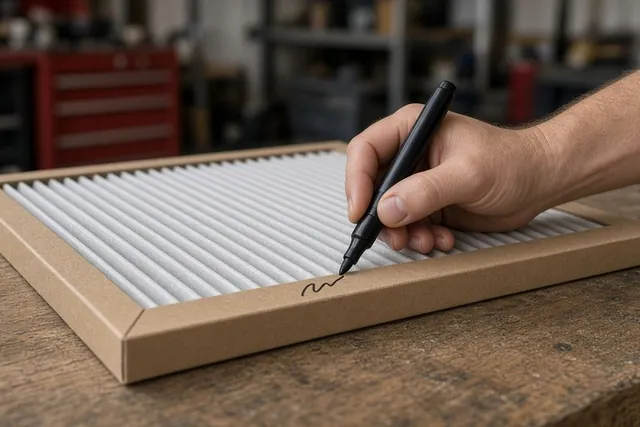
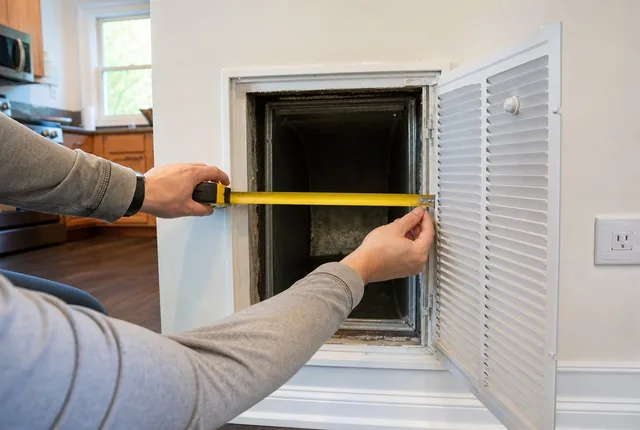 ProblemNo size printed on my air filter: how to find itThe print on the frame is gone or the slot is empty. Measure the opening, round to the nearest inch, and know when you need a custom size.Read the guide
Related tools
 Chapter 01Appliance and warranty logRecord each appliance's model number, serial number and purchase date, see which warranty ends next, and print a one-page log for the drawer.Open the tool
 Chapter 01Home service logTurn the last visit for your heating, cooling, chimney and septic service into the next due date and a book-by date, then print a log of who to call.Open the tool
 Chapter 01Home inventory sheetList what you own room by room, with what you paid, serial numbers and which items have a photo. See each room's total and print a one-page sheet.Open the tool
 Chapter 05Home maintenance calendarPick your climate region, say whether you own or rent and tick what the house has. Get a year of household jobs by month and a year sheet to print.Open the tool
- Chapter 01All records toolsPrintable home records with a calculator behind each one: appliance and warranty log, HVAC filter sizes and change dates.Open the chapter
Sources
- DHW First Hour Rating (RED Calc tool), Pacific Northwest National Laboratory, Building America Solution Center (U.S. Department of Energy). Checked October 19, 2026.
- 16 CFR § 305.17: Television labeling and water heater label content (EnergyGuide), Federal Trade Commission, 16 CFR 305.17 (Energy Labeling Rule), via Cornell LII. Checked October 20, 2026.
- DHW Instantaneous Sizing (RED Calc tool), Pacific Northwest National Laboratory, Building America Solution Center (U.S. Department of Energy). Checked October 19, 2026.
See every source on the site on the sources page. Spotted an error? Tell us.